Welcome to the Hotel AWP--
So I keep hearing more and more how many people will miss out on going to AWP because they didn't pre-register. Who knew?! I almost wonder if this is a plan to make people not wait until the last minute to register, or maybe now with the internet, more and more people know about the AWP and they just have a huge number of participants. I'm not sure. I know honestly, I hadn't realized exactly what the AWP was (or even cared about it) until about 3 or 4 years ago.
Of course, that said, I've only been to one AWP-- Vancouver. And I told myself I wouldn't go to another until my second book is out. So, it could be a long while until you see me at AWP. I could be attending with my senior discount and AARP card. (But let's hope not.)
*
Poetry Love in 2008
I learned yesterday that I'm going to be one of the 14 poets who will be part of this fantastic Valentine's project that Kristy Bowen's Dancing Girl Press is creating.
Here's how Kristy describes the project:
[The project is made of] epistolary poems for a DIY-inspired book arts anthology project due out in February 2008. This is a small limited edition art book project involving each piece as one of a series of 14 “love” letters by women poets/artists in a 5 x 7 box, each with its own author-designed envelope.
I am thrilled to be a part of this and being the Capricorn that I am, have already created my design and will be working on making a hundred of these this month. I see this project as the literary equivalent of receiving a box of chocolates for Valentine's day...except less calories and more thought for the brain.
By the way, if you want to be a subscriber to Kristy's press, for $100 you'll received one of these boxes as well as many other cool things including chapbooks. Learn more about that here.
*
Other projects I'm working on in '08--
My manuscript-- which is complete, just in need of a good home.
The motherhood anthology -- the timeline for this has changed a little bit as my co-editor has had some health concerns. She is still very passionate about the project, but we may not be able to complete it as soon as we had planned to. I've just begun sending emails to the poets who submitted--we received over 1300 poems--but I'm making a batch of "finalists," which are poems that I will share with Elisha for our final choice in the anthology.
I'm only about 1/4 through and I began with poems that were submitted way back in May and am moving my way through the months. So if you submitted, you'll be hearing from me in the next few weeks.
I'll also be mailing out rejections this month and I truly dislike that doing that.
Poems - Always new poems waiting to be written. Always.
Showing posts with label poetry. Show all posts
Showing posts with label poetry. Show all posts
Friday, January 04, 2008
Wednesday, November 14, 2007
The "I" in a Poem
January over at the POET MOM blog started a good conversation on the use of "I" in a poem.
She writes:
There's No "I" in Poetry
I was listening to a recent podcast at the Poetry Foundation’s Web site on the “I” in poetry. The critic asserted that since the Confessional Poets (Robert Lowell, Anne Sexton, Elizabeth Bishop, Sylvia Plath, for example) of the 1960s, “I” is the most overused word in poetry. This has lead to an abundance of “me” poetry: me to a lover, me to my parents, me to my children, something bad has happened to me. And it all wraps up in a nice little bow—my relationship to the rest of the world.
Then asks:
So I wonder: is the “I” overused? Have poets lost the ability to write detached, objective poetry? Have we lost our ability to write about the universal? Can we write a poem about things and situations but not have it relate to ourselves directly?
As one who writes in the confessional vein, I welcome the thoughts of writers but especially readers. What kinds of poetry to you gravitate to, more personal poetry (first person) or that which talks about the broader spectrum of the human condition (third person)?
Here's my response--
Critics can annoy me. Even their name is negative (critic instead of writer’s helper.)
But I've never been fond of grand-sweeping statements like this. "The I is overused." "There's too much nature poetry." Etc. etc.
No, the I isn't overused, just as the he/she/they/we/you isn't overused. Each poem is a choice of perspective, of point of view.
I definitely don't think that poets have lost the ability to write detached, objective poetry, but is that what we are seeking in the poems we read? I'm looking for connection, for insight, for showing me the world in a way I haven't noticed before. I'm not so interested in the POV.
Also, I have always had a huge issue with the term "confessional,"--what were they "confessing?" Especially as many of the "confessional poets" were women. I have always felt the term is another way to quiet the voices of people (many women in this case) from speaking what matters most to them.
Yes, childbirth is bloody and sticky. Yes, we sometimes have terrible relationships with others. We think about death. We have traumas in our life, depression. To me, there is no taboo subject in poetry and any of these can be written about in any POV. It comes down to the craft for me--is it a well-crafted poem?
A lot of my poems come from personal experience, sometimes they don't. Sometimes I write in first person about something I've never experienced, sometimes I don't. Sometimes I write in *third person* about an autobiographical event, sometimes I don't.
But is the "I" overused? How can it be? It's just a letter, another way to tell a story. Just as there can't be too many kinds of beetles, birds, or leaves, their can't be too many poems with I in them. Some will be wonderful. Others will be terrible. But to make anyone question their use of the "I" is like taking a certain ingredient out of your cupboard and asking you to make every meal it without it. You can do it, but why would any poet want to limit herself?
I gravitate to any poetry that surprises me through language or thought (not poetry that's meant to shock though- we have cable, there's not much that could shock these days) or poetry that shows me the world in a new way. I tend to go allow with whatever POV is used, the overall poem is what I feel connection with.
* * *
Also, on a side note, it's rather amusing and ironic to me how Elizabeth Bishop is being considered a "confessional" poet now given how much grief she gave Lowell about his poems.
She writes:
There's No "I" in Poetry
I was listening to a recent podcast at the Poetry Foundation’s Web site on the “I” in poetry. The critic asserted that since the Confessional Poets (Robert Lowell, Anne Sexton, Elizabeth Bishop, Sylvia Plath, for example) of the 1960s, “I” is the most overused word in poetry. This has lead to an abundance of “me” poetry: me to a lover, me to my parents, me to my children, something bad has happened to me. And it all wraps up in a nice little bow—my relationship to the rest of the world.
Then asks:
So I wonder: is the “I” overused? Have poets lost the ability to write detached, objective poetry? Have we lost our ability to write about the universal? Can we write a poem about things and situations but not have it relate to ourselves directly?
As one who writes in the confessional vein, I welcome the thoughts of writers but especially readers. What kinds of poetry to you gravitate to, more personal poetry (first person) or that which talks about the broader spectrum of the human condition (third person)?
Here's my response--
Critics can annoy me. Even their name is negative (critic instead of writer’s helper.)
But I've never been fond of grand-sweeping statements like this. "The I is overused." "There's too much nature poetry." Etc. etc.
No, the I isn't overused, just as the he/she/they/we/you isn't overused. Each poem is a choice of perspective, of point of view.
I definitely don't think that poets have lost the ability to write detached, objective poetry, but is that what we are seeking in the poems we read? I'm looking for connection, for insight, for showing me the world in a way I haven't noticed before. I'm not so interested in the POV.
Also, I have always had a huge issue with the term "confessional,"--what were they "confessing?" Especially as many of the "confessional poets" were women. I have always felt the term is another way to quiet the voices of people (many women in this case) from speaking what matters most to them.
Yes, childbirth is bloody and sticky. Yes, we sometimes have terrible relationships with others. We think about death. We have traumas in our life, depression. To me, there is no taboo subject in poetry and any of these can be written about in any POV. It comes down to the craft for me--is it a well-crafted poem?
A lot of my poems come from personal experience, sometimes they don't. Sometimes I write in first person about something I've never experienced, sometimes I don't. Sometimes I write in *third person* about an autobiographical event, sometimes I don't.
But is the "I" overused? How can it be? It's just a letter, another way to tell a story. Just as there can't be too many kinds of beetles, birds, or leaves, their can't be too many poems with I in them. Some will be wonderful. Others will be terrible. But to make anyone question their use of the "I" is like taking a certain ingredient out of your cupboard and asking you to make every meal it without it. You can do it, but why would any poet want to limit herself?
I gravitate to any poetry that surprises me through language or thought (not poetry that's meant to shock though- we have cable, there's not much that could shock these days) or poetry that shows me the world in a new way. I tend to go allow with whatever POV is used, the overall poem is what I feel connection with.
* * *
Also, on a side note, it's rather amusing and ironic to me how Elizabeth Bishop is being considered a "confessional" poet now given how much grief she gave Lowell about his poems.

Sunday, November 04, 2007
Soundtrack to Writing
Many times when I write, I keep a certain music on in the background. Sometimes its just one song, sometimes its many.
Currently, this is the song of the hour:
Ingrid Michaelson's The Way I Am
Of course, some evil person has just made it into an Old Navy commercial and I am spitting nails about that.
Currently, this is the song of the hour:
Ingrid Michaelson's The Way I Am
Of course, some evil person has just made it into an Old Navy commercial and I am spitting nails about that.
Tuesday, October 09, 2007
The Gong Show

The Explorer Writes in Her Journal--
Well, yesterday was Columbus Day and I celebrated by trying to mail a letter and going to a closed library. A perfect way to commemorate a faux-holiday. My daughter has known the phrase "Euro-centric" in regards to Columbus Day since she was three. I think Chris Rock said it best regarding Columbus-- "The land he discovered had occupants on it. That's like discovering someone's back yard."
So yesterday stumbled upon a new shop in my town I've never seen and claimed it for my family. I also took ownership of a latte stand, an acre of blackberry bushes, and renamed Puget Sound, Puget Kelli. I feel good about what I accomplished in the new world and look forward to other discoveries I will make in my lifetime.
*
Not Poetry, but Dessert
We made Halloween funfetti cupcakes yesterday. Revised: My husband and daughter made funfetti cupcakes, I helped decorate them.
*
Poem With Attitude
I'm working on a poem right now that is trying to torture a confession out of me. I put the poem on a pedestal and it falls off. I hold the poem up to the light and I can see through it. The poem laughs off my revisions. I tell the poem to stop talking so loudly so I can work and it whistles the theme song to Mission Impossible. I tell the poem I can hear its sarcasm. The poem tells me to stop, relax, and come back later. I tell the poem no better time than the present. I tell the poem, now now now. The poem puts a bag over itself. The poem becomes the Unknown Comic. I tell the poem that I mean it no harm, but it can't hear me as I snap it with my pen. The poem reaches for the gong and I leave the stage.
Friday, September 14, 2007
Persona Poems

There's been a big conversation on the Wompo Listserve (women poets listserve) about persona poems and autobiography in poetry. I've been horrified to read how many readers believe that every poem is autobiographical (if this is true, it means Jeannine Hall Gailey eats children! ;-) --she doesn't of course, she mentioned this was truly fictional).
But Rebecca Loudon and Jeannine both had wonderful responses on the topic.
Here's my response referencing their responses--
"Thanks, Rebecca for your response.
I especially appreciate what Rebecca wrote-- "What I was writing is that why should the poet always be considered the narrator/subject/I of the poem? I was addressing the readers of poetry in my post, not poets. I never assume anyone who writes a poem is writing a memoir--and--...because poems can become so personal (I call these "Marcie's bladder poems) that they lose their art."
Also what Jeannine said, "But I take a more Jungian view, that we all have some shadow self, that the collective unconscious exists and we sometimes write out of that, etc."
Here's my 2 cents--
Poetry is quite complex. It plays with Truth vs. Fact., it offers shadow selves, personas, different voices, but ultimately, it is the poem that comes to us on the page, not the poet. And again, I think the discussion comes back to craft vs.content.
My concern in a society that views the poet as the speaker of each and every poem is that poems will not be written because the poet will be afraid that the topic/subject/theme will reflect poorly on them. Who would want to write about a difficulty in a relationship or a bad marriage if the result was everyone assumed the poet and her husband were on the brink of divorce?
I feel I am very open about my life, but I would feel limited in my topics if everyone assumed that every poem in first person was about me. I think I've lived a pretty interesting life, but I believe my imagination offers much more to the reader than my actual lived experience. Though both places--real and imagination--are places to draw from when we write and as Tom Hunley said, we can use both in our poems.
One interesting note is many times--because poets fear that their first person poems will be considered autobiography--poets will write in third person on the subject, topics, or issues that are closest to them. The "she" or "he" in the poem is really them. I guess because this mistake does happen to poets a lot, it's another way to keep the focus on the poem and not the poet.
I write because I like to be in the background. I love to create something and see how it moves in the world. I would be a painter if I could paint or a sculpture if I could sculpt, but I love language and words, so I write. So when I create something on the page, I send it out into the world without me, without my biography or list of experiences. I send out a piece of paper with words on it, not with a photo, resume, or my ID-- the poem enters the world without me and its better that way.
There is too much "celebrity" right now, people famous for being famous, and that's what I love about well-written poems--they don't need an author with perfect white teeth or a good hairstyle, they don't need an author who speaks well at parties or always has the perfect line (that's what revision is for!) One of my favorite things about a poem is that the best poems need nothing else except words. That's it! How simple. You don't have to be rich, powerful, or good-looking. You don't even have to ever leave your little home in Massachusetts. Poems require a strong mind and the ability to put down "the best words in the best order" as Coleridge said.
We are lucky to have this before us as poets, the ability to write about ourselves or not to, or to do both. I guess I'm thankful that poetry isn't memoir and poetry isn't fiction, but we've created genre to move into each of these places if we choose.
Anyway, this whole conversation has been wonderful, I've found it both enlightening and absolutely frightening. ;-)
*******************
So the question is--
Do you care if the poet is writing about something s/he hasn't lived or isn't true?
Is it (fiction/persona) always okay or do you draw the line at certain topics?
Are you always the "speaker" in your poem --or are your poems usually or always based on your life? Why or why not?
But Rebecca Loudon and Jeannine both had wonderful responses on the topic.
Here's my response referencing their responses--
"Thanks, Rebecca for your response.
I especially appreciate what Rebecca wrote-- "What I was writing is that why should the poet always be considered the narrator/subject/I of the poem? I was addressing the readers of poetry in my post, not poets. I never assume anyone who writes a poem is writing a memoir--and--...because poems can become so personal (I call these "Marcie's bladder poems) that they lose their art."
Also what Jeannine said, "But I take a more Jungian view, that we all have some shadow self, that the collective unconscious exists and we sometimes write out of that, etc."
Here's my 2 cents--
Poetry is quite complex. It plays with Truth vs. Fact., it offers shadow selves, personas, different voices, but ultimately, it is the poem that comes to us on the page, not the poet. And again, I think the discussion comes back to craft vs.content.
My concern in a society that views the poet as the speaker of each and every poem is that poems will not be written because the poet will be afraid that the topic/subject/theme will reflect poorly on them. Who would want to write about a difficulty in a relationship or a bad marriage if the result was everyone assumed the poet and her husband were on the brink of divorce?
I feel I am very open about my life, but I would feel limited in my topics if everyone assumed that every poem in first person was about me. I think I've lived a pretty interesting life, but I believe my imagination offers much more to the reader than my actual lived experience. Though both places--real and imagination--are places to draw from when we write and as Tom Hunley said, we can use both in our poems.
One interesting note is many times--because poets fear that their first person poems will be considered autobiography--poets will write in third person on the subject, topics, or issues that are closest to them. The "she" or "he" in the poem is really them. I guess because this mistake does happen to poets a lot, it's another way to keep the focus on the poem and not the poet.
I write because I like to be in the background. I love to create something and see how it moves in the world. I would be a painter if I could paint or a sculpture if I could sculpt, but I love language and words, so I write. So when I create something on the page, I send it out into the world without me, without my biography or list of experiences. I send out a piece of paper with words on it, not with a photo, resume, or my ID-- the poem enters the world without me and its better that way.
There is too much "celebrity" right now, people famous for being famous, and that's what I love about well-written poems--they don't need an author with perfect white teeth or a good hairstyle, they don't need an author who speaks well at parties or always has the perfect line (that's what revision is for!) One of my favorite things about a poem is that the best poems need nothing else except words. That's it! How simple. You don't have to be rich, powerful, or good-looking. You don't even have to ever leave your little home in Massachusetts. Poems require a strong mind and the ability to put down "the best words in the best order" as Coleridge said.
We are lucky to have this before us as poets, the ability to write about ourselves or not to, or to do both. I guess I'm thankful that poetry isn't memoir and poetry isn't fiction, but we've created genre to move into each of these places if we choose.
Anyway, this whole conversation has been wonderful, I've found it both enlightening and absolutely frightening. ;-)
*******************
So the question is--
Do you care if the poet is writing about something s/he hasn't lived or isn't true?
Is it (fiction/persona) always okay or do you draw the line at certain topics?
Are you always the "speaker" in your poem --or are your poems usually or always based on your life? Why or why not?
Monday, July 02, 2007
Agree or Disagree??
I saw this on another blog and it's something J9 and I were sort of discussing this morning. We talked more about what to tell the young MFA students as they step out into the world.
Having been raised by a conservative Republican businessman father, who when I turned 18 handed me pamplets on "A Woman's Rights in the Workplace" and a deposit into my retirement fund, my advice for all young MFA dreamers and writers is to follow your bliss. I'm sure this comes from me jumping into the pool of life with waterwings on, with a lifeguard on shore, and flippers just in case. I did not roam out into life bravely. I followed the "secure" route, ending up in a corporate job, with a happy paycheck, 401K, DKNY outfits, and nylons. I followed what everyone else was doing, graduating and getting a "good job" with stock options.
Now, granted, it was that paycheck that allowed me stash away cash to have a downpayment on this magical home and place live now and I can't have regrets because when I wake up in the morning, I am thankful for the world around me and that world would not have been made possible had I taken any other route, but I realized about 2 1/2 years into my job, I was losing myself and becoming my father.
But if I had to give advice now, and this is the advice I'd give to my own daughter, it's to follow what you're passionate about, even if it's making headbands out of recycled material, or yes, even being a mime. Whatever you love to do, go for it. I'm not about "security" anymore, about treating writing or passion as your "hobby" while you do something else. Yes, sometimes we have to "do something else" (like sell your stuff on eBay to buy books or get a part time job, etc.) but I believe highly in jumping into the world and falling flat on your face. It makes for better stories.
As I grow older, I'm much more the believer in the fail and fail again theory, into throwing one's heart into every space around you then cleaning up the blood with a tissue. A lot of my Republican tendencies about security and money changed in December when I lost my eyesight for a month. I was reminded how temporary we all are, how quickly things can change, and to be very aware what we give our priority to.
I believe in living simply, volunteer simplicity. And while I'll splurge on the occasional Buddha, I remind myself that each dollar I save, is a dollar I don't have to earn back. It's not about living a risky life, but taking risks in what you believe in. It's not always easy, sometimes there are tears involved. Sometimes you will run out of the house only to slam into a glass sliding door, but it's better than waking up and realizing you are regretful about something you didn't try or do. You can always change paths, turn around and fix a mistake, but to find that you forgot to live the life you wanted... a painful morning.
Anyway, here's what I've been blabbering about as well. Though I think Cary Tennis' answer is thoughtful because it reminds me there are many options, just keep feeding your art.
April 17, 2007
Hi, Cary,
I’m approaching 50 years old. I’ve been a jazz pianist for nearly 30 years. I’m not anyone you’ve ever heard of. I’m good but not great. I never thought I would be famous, and that doesn’t bother me. I’ve had lots of hotel and restaurant gigs, accompanied hundreds of lame wannabe singers (and some good ones, too) and done thousands of gigs in jazz clubs, some with incredible musicians and some where nobody was listening. I always thought if I stuck with it, I’d be able to make a living. I think I read somewhere that the average jazz musician these days makes about $17,000 a year. A 50-year-old making that seems pathetic. I do better than that, but not by much. I’ve spent my life climbing this ladder of musical success and found out when I got near the top that the ladder was against the wrong wall. I’m not married and don’t have kids. Never would have been able to afford them. That would have been nice.
How can a person like me change into something different? It seems impossible and I don’t know where to begin.
We always hear heart-warming stories of people who followed their dream and never gave up and so forth, but what of the people who followed their dream and failed? We don’t want to hear about them.
I’m an intelligent person. I have two master’s degrees. One in music, the other in fine arts (another useful degree). Yet I have absolutely no idea about how to go about making money.
Yes, that is what I want. Money. I want health insurance. I want a decent place to live. I want to think maybe I won’t have to be taking lousy gigs at age 80 to buy a meal.
I don’t think I’ve been totally naive. I didn’t strive for fame, à la “American Idol.” I studied hard. I know music theory inside out. I checked out the history of jazz piano from Jelly Roll Morton to Keith Jarrett. I thought being true to your art was satisfaction enough. I guess it’s not. I want the satisfaction of making a decent living. I’m tired of taking every $100 gig that comes my way to play for a tone-deaf singer. After I drive an hour each way, and pay the IRS its cut, and I end up with $50. This is what practitioners of “America’s only original art form” have to deal with.
I really think I could leave it all behind. I could be happy playing the occasional gig for fun. Or playing for myself and friends. I’d like to do some more composing just for self-satisfaction. But I have no idea how to make a living! This revelation just drives me nuts. The thought of starting from scratch at my age is mind-boggling.
I know these questions are very broad. Most people look at me and think I’m lucky, that playing music for a living must be great. Other people in other occupations must feel the same. I’m just barely making a living. Is it possible for me to change?
Musically Frustrated
Carey’s Response:
Dear Musically Frustrated,
I, too, was frustrated this morning when I sat down to answer your letter. Nothing was coming. I went to the regular place where I go to get words and there were no words there. Weird. Am I running out? I had to leave my house and walk around. I went to a meeting of the type I often attend. It was somewhat comforting but did not really help.
Then, standing on the street corner waiting for a train, I noticed a bumper sticker on an old Toyota Camry sedan. It said “Real musicians have day jobs!”
I felt that my prayers had been answered — yours too, actually.
It was a needed reminder: Your music does not have to support you. In fact, your music might be happier if you were supporting it.
You have done the almost impossible by supporting yourself as a jazz pianist all these years. It is a remarkable, heroic and admirable feat. That doesn’t mean that at a certain point you can’t sit out a few sets.
You may find it hard to change; deep down you may feel that what you are is a musician, end of story.
I felt at one time that I was a writer, end of story. But it wasn’t end of story. Was more like beginning of story.
I did not gain freedom to write with fluidity and ease until I stopped believing that I had to be a writer.
Read the rest of the response here:
Having been raised by a conservative Republican businessman father, who when I turned 18 handed me pamplets on "A Woman's Rights in the Workplace" and a deposit into my retirement fund, my advice for all young MFA dreamers and writers is to follow your bliss. I'm sure this comes from me jumping into the pool of life with waterwings on, with a lifeguard on shore, and flippers just in case. I did not roam out into life bravely. I followed the "secure" route, ending up in a corporate job, with a happy paycheck, 401K, DKNY outfits, and nylons. I followed what everyone else was doing, graduating and getting a "good job" with stock options.
Now, granted, it was that paycheck that allowed me stash away cash to have a downpayment on this magical home and place live now and I can't have regrets because when I wake up in the morning, I am thankful for the world around me and that world would not have been made possible had I taken any other route, but I realized about 2 1/2 years into my job, I was losing myself and becoming my father.
But if I had to give advice now, and this is the advice I'd give to my own daughter, it's to follow what you're passionate about, even if it's making headbands out of recycled material, or yes, even being a mime. Whatever you love to do, go for it. I'm not about "security" anymore, about treating writing or passion as your "hobby" while you do something else. Yes, sometimes we have to "do something else" (like sell your stuff on eBay to buy books or get a part time job, etc.) but I believe highly in jumping into the world and falling flat on your face. It makes for better stories.
As I grow older, I'm much more the believer in the fail and fail again theory, into throwing one's heart into every space around you then cleaning up the blood with a tissue. A lot of my Republican tendencies about security and money changed in December when I lost my eyesight for a month. I was reminded how temporary we all are, how quickly things can change, and to be very aware what we give our priority to.
I believe in living simply, volunteer simplicity. And while I'll splurge on the occasional Buddha, I remind myself that each dollar I save, is a dollar I don't have to earn back. It's not about living a risky life, but taking risks in what you believe in. It's not always easy, sometimes there are tears involved. Sometimes you will run out of the house only to slam into a glass sliding door, but it's better than waking up and realizing you are regretful about something you didn't try or do. You can always change paths, turn around and fix a mistake, but to find that you forgot to live the life you wanted... a painful morning.
Anyway, here's what I've been blabbering about as well. Though I think Cary Tennis' answer is thoughtful because it reminds me there are many options, just keep feeding your art.
April 17, 2007
Hi, Cary,
I’m approaching 50 years old. I’ve been a jazz pianist for nearly 30 years. I’m not anyone you’ve ever heard of. I’m good but not great. I never thought I would be famous, and that doesn’t bother me. I’ve had lots of hotel and restaurant gigs, accompanied hundreds of lame wannabe singers (and some good ones, too) and done thousands of gigs in jazz clubs, some with incredible musicians and some where nobody was listening. I always thought if I stuck with it, I’d be able to make a living. I think I read somewhere that the average jazz musician these days makes about $17,000 a year. A 50-year-old making that seems pathetic. I do better than that, but not by much. I’ve spent my life climbing this ladder of musical success and found out when I got near the top that the ladder was against the wrong wall. I’m not married and don’t have kids. Never would have been able to afford them. That would have been nice.
How can a person like me change into something different? It seems impossible and I don’t know where to begin.
We always hear heart-warming stories of people who followed their dream and never gave up and so forth, but what of the people who followed their dream and failed? We don’t want to hear about them.
I’m an intelligent person. I have two master’s degrees. One in music, the other in fine arts (another useful degree). Yet I have absolutely no idea about how to go about making money.
Yes, that is what I want. Money. I want health insurance. I want a decent place to live. I want to think maybe I won’t have to be taking lousy gigs at age 80 to buy a meal.
I don’t think I’ve been totally naive. I didn’t strive for fame, à la “American Idol.” I studied hard. I know music theory inside out. I checked out the history of jazz piano from Jelly Roll Morton to Keith Jarrett. I thought being true to your art was satisfaction enough. I guess it’s not. I want the satisfaction of making a decent living. I’m tired of taking every $100 gig that comes my way to play for a tone-deaf singer. After I drive an hour each way, and pay the IRS its cut, and I end up with $50. This is what practitioners of “America’s only original art form” have to deal with.
I really think I could leave it all behind. I could be happy playing the occasional gig for fun. Or playing for myself and friends. I’d like to do some more composing just for self-satisfaction. But I have no idea how to make a living! This revelation just drives me nuts. The thought of starting from scratch at my age is mind-boggling.
I know these questions are very broad. Most people look at me and think I’m lucky, that playing music for a living must be great. Other people in other occupations must feel the same. I’m just barely making a living. Is it possible for me to change?
Musically Frustrated
Carey’s Response:
Dear Musically Frustrated,
I, too, was frustrated this morning when I sat down to answer your letter. Nothing was coming. I went to the regular place where I go to get words and there were no words there. Weird. Am I running out? I had to leave my house and walk around. I went to a meeting of the type I often attend. It was somewhat comforting but did not really help.
Then, standing on the street corner waiting for a train, I noticed a bumper sticker on an old Toyota Camry sedan. It said “Real musicians have day jobs!”
I felt that my prayers had been answered — yours too, actually.
It was a needed reminder: Your music does not have to support you. In fact, your music might be happier if you were supporting it.
You have done the almost impossible by supporting yourself as a jazz pianist all these years. It is a remarkable, heroic and admirable feat. That doesn’t mean that at a certain point you can’t sit out a few sets.
You may find it hard to change; deep down you may feel that what you are is a musician, end of story.
I felt at one time that I was a writer, end of story. But it wasn’t end of story. Was more like beginning of story.
I did not gain freedom to write with fluidity and ease until I stopped believing that I had to be a writer.
Read the rest of the response here:
Saturday, June 30, 2007
From The Virginia Quarterly Review Online
Read the full article on the link above...
Shoot the Messenger: Dana Goodyear, David Orr, and the Stewards of Poetry
John Casteen
When Dana Goodyear’s New Yorker piece on Poetry magazine and the Poetry Foundation appeared in March, many poets and readers felt a profound sense of gratitude to her. It came as a tremendous relief to find a writer as articulate and credible as Goodyear leveling the criticisms many of us have been developing privately for several years: that Ruth Lilly’s gift to the magazine is being squandered by managers with little imagination and no apparent sense of purpose or history; that the current editorial regime has lessened the magazine by making uninspired choices for the front of the magazine (poems) and vindictive ones for the back (reviews); and that many talented writers, whether new to publishing or well established, may smell decay between Poetry’s pages and choose as a result to send their best work elsewhere.
. . .
Poetry forgot the critic’s role along about the time its editors fell in love with the sound of William Logan’s voice, and in recent years most readers have found greater interest—albeit a tabloid, rubbernecking-after-a-car-crash interest—in its predictable prose than in its predictable verse. It has become the place for those who’d want to see Jeff Clark (the poet) compared to Kim Jong Il (the demagogue), who’d enjoy a public evisceration of Franz Wright in the Letters section, who’d find value in a review of Derek Walcott that condemns his body of work without discussing his poems, and so on.
. . .
Wiman’s stable of writers—Orr, Dan Chiasson, and Peter Campion chief among them—generally are brilliant and intense prose stylists—thoughtful, erudite and well-read thinkers, and passionate writers of clear rhetoric. That is to say, they resemble Logan. Also, like Logan, with some commendable exceptions, their work tends toward the arrogant, masturbatory, spiteful, bombastic, and mean-spirited hatchet job.
. . .
The pain a critic causes must be slight and illuminating. Hugh Kenner was a critic; Harold Bloom is a critic, and Helen Vendler, and probably James Longenbach. The writers in the back of Poetry are mere reviewers of books, mistaking their own pyrotechnically phrased opinions for the kind of enlightened utterance that reveals poetry to its readers and earns their good faith.
. . .
It saddens even those of us who’ve long since lost confidence in Orr and his colleagues to see him stoop to the kind of ad hominem tactics that bring Goodyear personally into an argument that was supposed to be about the best stewardship of poetry. Orr’s need to point out that Goodyear is thirty years old doesn’t tell us she’s not gifted enough to have appeared in The New Yorker; it tells us that his apparent bias against comparatively young poets might well keep him from bringing his readers the next John Keats, who died at 25.
. . .
Furthermore, some talented writers and readers will arrive at the conclusion that Poetry can no longer be considered English-language poetry’s gold standard, that its scope and reputation will be diminished for the imaginable future by a doctrinaire and wrong-headed editorial stance, and that their energies probably are best directed elsewhere. Those of us whose affections for the magazine predate the Lilly gift are deeply saddened by that prospect.
# # #
Shoot the Messenger: Dana Goodyear, David Orr, and the Stewards of Poetry
John Casteen
When Dana Goodyear’s New Yorker piece on Poetry magazine and the Poetry Foundation appeared in March, many poets and readers felt a profound sense of gratitude to her. It came as a tremendous relief to find a writer as articulate and credible as Goodyear leveling the criticisms many of us have been developing privately for several years: that Ruth Lilly’s gift to the magazine is being squandered by managers with little imagination and no apparent sense of purpose or history; that the current editorial regime has lessened the magazine by making uninspired choices for the front of the magazine (poems) and vindictive ones for the back (reviews); and that many talented writers, whether new to publishing or well established, may smell decay between Poetry’s pages and choose as a result to send their best work elsewhere.
. . .
Poetry forgot the critic’s role along about the time its editors fell in love with the sound of William Logan’s voice, and in recent years most readers have found greater interest—albeit a tabloid, rubbernecking-after-a-car-crash interest—in its predictable prose than in its predictable verse. It has become the place for those who’d want to see Jeff Clark (the poet) compared to Kim Jong Il (the demagogue), who’d enjoy a public evisceration of Franz Wright in the Letters section, who’d find value in a review of Derek Walcott that condemns his body of work without discussing his poems, and so on.
. . .
Wiman’s stable of writers—Orr, Dan Chiasson, and Peter Campion chief among them—generally are brilliant and intense prose stylists—thoughtful, erudite and well-read thinkers, and passionate writers of clear rhetoric. That is to say, they resemble Logan. Also, like Logan, with some commendable exceptions, their work tends toward the arrogant, masturbatory, spiteful, bombastic, and mean-spirited hatchet job.
. . .
The pain a critic causes must be slight and illuminating. Hugh Kenner was a critic; Harold Bloom is a critic, and Helen Vendler, and probably James Longenbach. The writers in the back of Poetry are mere reviewers of books, mistaking their own pyrotechnically phrased opinions for the kind of enlightened utterance that reveals poetry to its readers and earns their good faith.
. . .
It saddens even those of us who’ve long since lost confidence in Orr and his colleagues to see him stoop to the kind of ad hominem tactics that bring Goodyear personally into an argument that was supposed to be about the best stewardship of poetry. Orr’s need to point out that Goodyear is thirty years old doesn’t tell us she’s not gifted enough to have appeared in The New Yorker; it tells us that his apparent bias against comparatively young poets might well keep him from bringing his readers the next John Keats, who died at 25.
. . .
Furthermore, some talented writers and readers will arrive at the conclusion that Poetry can no longer be considered English-language poetry’s gold standard, that its scope and reputation will be diminished for the imaginable future by a doctrinaire and wrong-headed editorial stance, and that their energies probably are best directed elsewhere. Those of us whose affections for the magazine predate the Lilly gift are deeply saddened by that prospect.
# # #
Tuesday, April 10, 2007
Wandering Around an Albuquerque Airport Terminal
Someone recently shared this on the women's poetry listserve I'm on. I had to share it too--
The poet Naomi Shihab Nye wrote up this Albuquerque Airport experience and sent to exactly two friends, who passed it on to friends, who passed it on and on . . .
Wandering Around an Albuquerque Airport Terminal
by Naomi Shihab Nye
After learning my flight was detained 4 hours, I heard the announcement:
If anyone in the vicinity of gate 4-A understands any Arabic,please come
to the gate immediately.
Well -- one pauses these days. Gate 4-A was my own gate. I went there.
An older woman in full traditional Palestinian dress, just like my
grandma wore, was crumpled to the floor, wailing loudly. Help, said the
flight service person. Talk to her. What is her problem? We told her the
flight was going to be four hours late and she did this.
I put my arm around her and spoke to her haltingly. Shu dow-a, shu-
biduck habibti, stani stani schway, min fadlick, sho bit se-wee? The
minute she heard any words she knew -- however poorly used - she stopped
crying. She thought our flight had been cancelled entirely. She needed
to be in El Paso for some major medical treatment the following day. I
said no, no, we're fine, you'll get there, just late, who is picking you
up? Let's call him and tell him. We called her son and I spoke with him
in English.
I told him I would stay with his mother till we got on the plane and
would ride next to her -- Southwest.
She talked to him. Then we called her other sons just for the fun of it.
Then we called my dad and he and she spoke for a while in Arabic and
found out of course they had ten shared friends. Then I thought just for
the heck of it why not call some Palestinian poets I know and let them
chat with her. This all took up about 2 hours. She was laughing a lot by
then. Telling about her life. Answering questions.
She had pulled a sack of homemade mamool cookies -- little powdered
sugar crumbly mounds stuffed with dates and nuts -- out of her bag --
and was offering them to all the women at the gate. To my amazement, not
a single woman declined one. It was like a sacrament. The traveler from
Argentina, the traveler from California, the lovely woman from Laredo --
we were all covered with the same powdered sugar. And smiling. There are
no better cookies.
And then the airline broke out the free beverages from huge coolers --
non-alcoholic -- and the two little girls for our flight, one
African-American, one Mexican-American -- ran around serving us all
apple juice and lemonade and they were covered with powdered sugar, too.
And I noticed my new best friend -- by now we were holding hands -- had
a potted plant poking out of her bag, some medicinal thing, with green
furry leaves. Such an old country traveling tradition. Always carry a
plant. Always stay rooted to somewhere.
And I looked around that gate of late and weary ones and thought, this
is the world I want to live in. The shared world. Not a single person in
this gate -- once the crying of confusion stopped -- has seemed apprehensive
about any other person. They took the cookies. I wanted to hug all those
other women, too. This can still happen, anywhere.
Not everything is lost.
The poet Naomi Shihab Nye wrote up this Albuquerque Airport experience and sent to exactly two friends, who passed it on to friends, who passed it on and on . . .
Wandering Around an Albuquerque Airport Terminal
by Naomi Shihab Nye
After learning my flight was detained 4 hours, I heard the announcement:
If anyone in the vicinity of gate 4-A understands any Arabic,please come
to the gate immediately.
Well -- one pauses these days. Gate 4-A was my own gate. I went there.
An older woman in full traditional Palestinian dress, just like my
grandma wore, was crumpled to the floor, wailing loudly. Help, said the
flight service person. Talk to her. What is her problem? We told her the
flight was going to be four hours late and she did this.
I put my arm around her and spoke to her haltingly. Shu dow-a, shu-
biduck habibti, stani stani schway, min fadlick, sho bit se-wee? The
minute she heard any words she knew -- however poorly used - she stopped
crying. She thought our flight had been cancelled entirely. She needed
to be in El Paso for some major medical treatment the following day. I
said no, no, we're fine, you'll get there, just late, who is picking you
up? Let's call him and tell him. We called her son and I spoke with him
in English.
I told him I would stay with his mother till we got on the plane and
would ride next to her -- Southwest.
She talked to him. Then we called her other sons just for the fun of it.
Then we called my dad and he and she spoke for a while in Arabic and
found out of course they had ten shared friends. Then I thought just for
the heck of it why not call some Palestinian poets I know and let them
chat with her. This all took up about 2 hours. She was laughing a lot by
then. Telling about her life. Answering questions.
She had pulled a sack of homemade mamool cookies -- little powdered
sugar crumbly mounds stuffed with dates and nuts -- out of her bag --
and was offering them to all the women at the gate. To my amazement, not
a single woman declined one. It was like a sacrament. The traveler from
Argentina, the traveler from California, the lovely woman from Laredo --
we were all covered with the same powdered sugar. And smiling. There are
no better cookies.
And then the airline broke out the free beverages from huge coolers --
non-alcoholic -- and the two little girls for our flight, one
African-American, one Mexican-American -- ran around serving us all
apple juice and lemonade and they were covered with powdered sugar, too.
And I noticed my new best friend -- by now we were holding hands -- had
a potted plant poking out of her bag, some medicinal thing, with green
furry leaves. Such an old country traveling tradition. Always carry a
plant. Always stay rooted to somewhere.
And I looked around that gate of late and weary ones and thought, this
is the world I want to live in. The shared world. Not a single person in
this gate -- once the crying of confusion stopped -- has seemed apprehensive
about any other person. They took the cookies. I wanted to hug all those
other women, too. This can still happen, anywhere.
Not everything is lost.
Monday, April 02, 2007
Second Hand News - Pitt anthology series features 40 years of poetry
The real story--
I've got this anthology on my wish list and hope to buy it soon. It looks terrific.
Pitt anthology series features 40 years of poetry
By Regis Behe
TRIBUNE-REVIEW
Sunday, April 1, 2007
Poetry is not the most popular of art forms. Sure, there are hundreds of thousands of would-be poets, numerous online sites and communities devoted to poetry, and readings in most major metropolitan areas.
But when it comes to the arts, poets are like forgotten cousins. They don't have image problems because, save the occasional Maya Angelou sighting, they don't have images. They're anonymous, hidden in plain sight, riding buses and bicycles to and from work, raising families in the suburbs. They are teachers and academics, waiters and waitresses, nurses and gardeners.
And for 40 years, they've sent their manuscripts to the University of Pittsburgh Press. Celebrating four decades of publishing, the press has just released "American Poetry Now: Pitt Poetry Anthology Series." The collection features poems by two former U.S. poet laureates, Billy Collins and Ted Kooser. There are poets only poets and diehard enthusiasts know, such as Bob Hicock and Daisy Fried. There are poets who live in Pittsburgh, including Jan Beatty, Anthony Butts, Jim Daniels, Toi Derricotte and Lynn Emanuel.
"I've always tried to have a very catholic approach to what I do," says series editor Ed Ochester, who has been with the press for 29 years. "There are lots of people doing different kinds of things, all of which are excellent in their own kind. ... I try to be open to what we do and what we read."
One of the things Ochester is most proud of is that the University of Pittsburgh Press goes against the academic conceit that poetry must be serious and ponderous, of great weight and importance, in order to be significant.
In the collection's introduction, Ochester argues otherwise. Instead of teaching Edmund Spenser's "Faerie Queene," it's better to lure students to poetry with newer, more contemporary works. When he spent time as a visiting poet in high schools, he noted that students "were interested and often wildly enthusiastic when presented with contemporary poems that spoke to their concerns in their own language."
"The poetry that is often being promulgated in secondary schools and colleges is not bad stuff ... but in general, it's always the stuff that's been approved and looks a little bit old to the young people reading it," Ochester says.
That's why Ochester believers there are fewer people attracted to the form, despite its influence over everything from adverting copy to rock and hip-hop lyrics. Poetry, despite being framed and presented as a staid, ponderous art form, is supposed to entertain. He notes that Chaucer and Shakespeare wrote what was considered to be, at least in their lifetimes, entertaining works.
"There's been, for whatever reason, a notion that somehow poetry is very serious, mysterious," Ochester says. "That it may be a great genre for literature, but it's beyond a simple person like myself. That's historically nonsense. Poetry was one of the forms of literature and forms of entertainment, in the past and in the present. Anyone who thinks that poetry is essentially an elite art in the sense that it has an extremely limited audience is wrong, in historical terms and in terms of many of the best writers who are writing now."
And many of those are writers who have found homes with the Pitt press. Many of them, such as Collins and Kooser, were relatively unknown to the public at large, their relative fame happening after years of hard work. One of Ochester's points of pride is the number of manuscripts that have "come over the transom," completely unsolicited. Works by Hicok and Fried came to Pitt this way, and Ochester is especially proud that the press is not only self-supporting, but also does not charge a reading fee.
Ochester also revels in publishing poets like Denise Duhamel, who were summarily rejected by other presses.
"It was because what she was doing looked, to a lot of presses, to be so wild and so unusual and so readable and so much fun," Ochester says. "I think they didn't want to do it on that basis."
Ochester also points to the number of poets with Pittsburgh connections who have been published by the press. Noting poetry presses at Carnegie Mellon University and the independent Autumn House, Ochester believes that the confluence of poets and presses makes Pittsburgh one of the premier centers of poetry in the country.
But he's quick to add that every poet with local ties published by the press has earned publication.
"I've always been a little bit leery of publishing local people just because it looks parochial," Ochester says. "But the fact is that everyone we've published has also published successfully outside of Pittsburgh."
While Ochester is proud of the poets he's published, he's not about to anoint any of them as being for the ages. In the introduction he writes that the answer to the question "Where are the greats poet of today?" is "We don't know yet." Only time, Ochester thinks, will reveal who will be read in 50 years and beyond.
He does, however, think that some of the most inventive poets working today are published by Pitt press.
"I think of people are like Dean Young, Bob Hicok, Denise (Duhamel) , Daisy Fried, Virgil Suarez," Ochester says, noting that he won't name Pittsburgh-based poets, because he'd have to name them all. "All of these people have sold very well for books of poetry. And while they are not well-known, they are known to fans of poetry. I would say among those people, who are relatively young, are going to be the next poets who are extremely well-known."
I've got this anthology on my wish list and hope to buy it soon. It looks terrific.
Pitt anthology series features 40 years of poetry
By Regis Behe
TRIBUNE-REVIEW
Sunday, April 1, 2007
Poetry is not the most popular of art forms. Sure, there are hundreds of thousands of would-be poets, numerous online sites and communities devoted to poetry, and readings in most major metropolitan areas.
But when it comes to the arts, poets are like forgotten cousins. They don't have image problems because, save the occasional Maya Angelou sighting, they don't have images. They're anonymous, hidden in plain sight, riding buses and bicycles to and from work, raising families in the suburbs. They are teachers and academics, waiters and waitresses, nurses and gardeners.
And for 40 years, they've sent their manuscripts to the University of Pittsburgh Press. Celebrating four decades of publishing, the press has just released "American Poetry Now: Pitt Poetry Anthology Series." The collection features poems by two former U.S. poet laureates, Billy Collins and Ted Kooser. There are poets only poets and diehard enthusiasts know, such as Bob Hicock and Daisy Fried. There are poets who live in Pittsburgh, including Jan Beatty, Anthony Butts, Jim Daniels, Toi Derricotte and Lynn Emanuel.
"I've always tried to have a very catholic approach to what I do," says series editor Ed Ochester, who has been with the press for 29 years. "There are lots of people doing different kinds of things, all of which are excellent in their own kind. ... I try to be open to what we do and what we read."
One of the things Ochester is most proud of is that the University of Pittsburgh Press goes against the academic conceit that poetry must be serious and ponderous, of great weight and importance, in order to be significant.
In the collection's introduction, Ochester argues otherwise. Instead of teaching Edmund Spenser's "Faerie Queene," it's better to lure students to poetry with newer, more contemporary works. When he spent time as a visiting poet in high schools, he noted that students "were interested and often wildly enthusiastic when presented with contemporary poems that spoke to their concerns in their own language."
"The poetry that is often being promulgated in secondary schools and colleges is not bad stuff ... but in general, it's always the stuff that's been approved and looks a little bit old to the young people reading it," Ochester says.
That's why Ochester believers there are fewer people attracted to the form, despite its influence over everything from adverting copy to rock and hip-hop lyrics. Poetry, despite being framed and presented as a staid, ponderous art form, is supposed to entertain. He notes that Chaucer and Shakespeare wrote what was considered to be, at least in their lifetimes, entertaining works.
"There's been, for whatever reason, a notion that somehow poetry is very serious, mysterious," Ochester says. "That it may be a great genre for literature, but it's beyond a simple person like myself. That's historically nonsense. Poetry was one of the forms of literature and forms of entertainment, in the past and in the present. Anyone who thinks that poetry is essentially an elite art in the sense that it has an extremely limited audience is wrong, in historical terms and in terms of many of the best writers who are writing now."
And many of those are writers who have found homes with the Pitt press. Many of them, such as Collins and Kooser, were relatively unknown to the public at large, their relative fame happening after years of hard work. One of Ochester's points of pride is the number of manuscripts that have "come over the transom," completely unsolicited. Works by Hicok and Fried came to Pitt this way, and Ochester is especially proud that the press is not only self-supporting, but also does not charge a reading fee.
Ochester also revels in publishing poets like Denise Duhamel, who were summarily rejected by other presses.
"It was because what she was doing looked, to a lot of presses, to be so wild and so unusual and so readable and so much fun," Ochester says. "I think they didn't want to do it on that basis."
Ochester also points to the number of poets with Pittsburgh connections who have been published by the press. Noting poetry presses at Carnegie Mellon University and the independent Autumn House, Ochester believes that the confluence of poets and presses makes Pittsburgh one of the premier centers of poetry in the country.
But he's quick to add that every poet with local ties published by the press has earned publication.
"I've always been a little bit leery of publishing local people just because it looks parochial," Ochester says. "But the fact is that everyone we've published has also published successfully outside of Pittsburgh."
While Ochester is proud of the poets he's published, he's not about to anoint any of them as being for the ages. In the introduction he writes that the answer to the question "Where are the greats poet of today?" is "We don't know yet." Only time, Ochester thinks, will reveal who will be read in 50 years and beyond.
He does, however, think that some of the most inventive poets working today are published by Pitt press.
"I think of people are like Dean Young, Bob Hicok, Denise (Duhamel) , Daisy Fried, Virgil Suarez," Ochester says, noting that he won't name Pittsburgh-based poets, because he'd have to name them all. "All of these people have sold very well for books of poetry. And while they are not well-known, they are known to fans of poetry. I would say among those people, who are relatively young, are going to be the next poets who are extremely well-known."
Sunday, April 01, 2007
Brad Pitt Anthology Series Features 40 Years of Poetry
It seems others are getting into the poetry-biz:
Brad Pitt has just released "American Poetry Now: Brad Pitt’s Poetry Anthology Series."
Full article below--
Poetry is not the most popular of art forms. Sure, there are hundreds of thousands of would-be poets, numerous online sites and communities devoted to poetry, and readings in most major metropolitan areas.
But when it comes to the arts, poets are like forgotten cousins. They don't have image problems because, save the occasional Maya Angelou sighting, they don't have images. They're anonymous, hidden in plain sight, riding buses and bicycles to and from work, raising families in the suburbs. They are teachers and academics, waiters and waitresses, nurses and gardeners. Until now.
And for years, fans and other actors have sent their manuscripts to Brad Pitt. Celebrating four decades of life, Brad Pitt has just released "American Poetry Now: Brad Pitt’s Poetry Anthology Series." The collection features poems by two former movie mates, George Clooney and Matt Damon. There are poets only actors and diehard enthusiasts know, such as Erza Buzzington and Christina Cabot. There are poet-actors from Pittsburgh, including Michael Keaton, Ted Danson, Shirley Jones, and Jeff Goldblum.
"I've always tried to have a very catholic approach to what I do," says series editor Brad Pitt, who has been writing for 29 years. "There are lots of people doing different kinds of things, all of which are excellent in their own kind. ... I try to be open to what I do and what we read."
One of the things Pitt is most proud of is that the anthology goes against the New York conceit that actors who write poetry must be serious and ponderous, of great weight and importance, in order to be significant.
In the collection's introduction, Pitt argues otherwise. Instead of teaching Angelina Jolie "Faerie Queene," it's better to lure her to poetry with newer, more contemporary works. When they spent time visiting in high schools in New Orleans, he noted that students "were interested and often wildly enthusiastic when presented with contemporary poems that spoke to their concerns in their own language. Of course, they were also very interested in Angie, too."
"The poetry that is often being promulgated in secondary schools and colleges is not bad stuff ... but in general, it's always the stuff that's been approved and looks a little bit old to the young people reading it," Pitt says.
That's why Pitt believes there are fewer people attracted to the form, despite its influence over everything from adverting copy to rock and hip-hop lyrics. Like acting, poetry, despite being framed and presented as a staid, ponderous art form, is supposed to entertain. He notes that Chaucer and Shakespeare wrote what was considered to be, at least in their lifetimes, entertaining works. (Jolie laughs when he says this.)
"There's been, for whatever reason, a notion that somehow poetry is very serious, mysterious," Pitt says. "That it may be a great genre for literature, but it's beyond a simple person like myself. That's historically nonsense. Poetry was one of the forms of literature and forms of entertainment, in the past and in the present.
Anyone who thinks that poetry is essentially an elite art in the sense that it has an extremely limited audience is wrong, in historical terms and in terms of many of the best writers who are writing now."
And many of those are writers who have found homes with Brad Pitt. Many of them, such as Clooney and Damon, were relatively unknown to the public at large, their relative fame happening after years of hard work. One of Pitt’s points of pride is the number of manuscripts that have "come over the transom," completely unsolicited. Pitt also revels in publishing actor-poets like Jeff Goldblum, who were summarily rejected by other presses.
"It was because what he was doing looked, to a lot of presses, to be so wild and so unusual and so readable and so much fun," Pitt says. "I think they didn't want to do it on that basis."
Pitt also points to the number of poets with Hollywood or New York connections who have been published in this anthology. But he's quick to add that every actor-poet with local ties has earned publication.
"I've always been a little bit leery of publishing local people just because it looks parochial," Pitt says. "But the fact is that everyone we've published has also published successfully outside of Hollywood."
While Pitt is proud of the actor-poets he's published, he's not about to anoint any of them as being for the ages. In the introduction he writes that the answer to the question "Where are the greats poet of today?" is "We don't know yet." Only time, Pitt thinks, will reveal who will be read in 50 years and beyond.
He does, however, think that some of the most inventive poets working today are in Hollywood and secretly writing poetry in their rooms.
Brad Pitt has just released "American Poetry Now: Brad Pitt’s Poetry Anthology Series."
Full article below--
Poetry is not the most popular of art forms. Sure, there are hundreds of thousands of would-be poets, numerous online sites and communities devoted to poetry, and readings in most major metropolitan areas.
But when it comes to the arts, poets are like forgotten cousins. They don't have image problems because, save the occasional Maya Angelou sighting, they don't have images. They're anonymous, hidden in plain sight, riding buses and bicycles to and from work, raising families in the suburbs. They are teachers and academics, waiters and waitresses, nurses and gardeners. Until now.
And for years, fans and other actors have sent their manuscripts to Brad Pitt. Celebrating four decades of life, Brad Pitt has just released "American Poetry Now: Brad Pitt’s Poetry Anthology Series." The collection features poems by two former movie mates, George Clooney and Matt Damon. There are poets only actors and diehard enthusiasts know, such as Erza Buzzington and Christina Cabot. There are poet-actors from Pittsburgh, including Michael Keaton, Ted Danson, Shirley Jones, and Jeff Goldblum.
"I've always tried to have a very catholic approach to what I do," says series editor Brad Pitt, who has been writing for 29 years. "There are lots of people doing different kinds of things, all of which are excellent in their own kind. ... I try to be open to what I do and what we read."
One of the things Pitt is most proud of is that the anthology goes against the New York conceit that actors who write poetry must be serious and ponderous, of great weight and importance, in order to be significant.
In the collection's introduction, Pitt argues otherwise. Instead of teaching Angelina Jolie "Faerie Queene," it's better to lure her to poetry with newer, more contemporary works. When they spent time visiting in high schools in New Orleans, he noted that students "were interested and often wildly enthusiastic when presented with contemporary poems that spoke to their concerns in their own language. Of course, they were also very interested in Angie, too."
"The poetry that is often being promulgated in secondary schools and colleges is not bad stuff ... but in general, it's always the stuff that's been approved and looks a little bit old to the young people reading it," Pitt says.
That's why Pitt believes there are fewer people attracted to the form, despite its influence over everything from adverting copy to rock and hip-hop lyrics. Like acting, poetry, despite being framed and presented as a staid, ponderous art form, is supposed to entertain. He notes that Chaucer and Shakespeare wrote what was considered to be, at least in their lifetimes, entertaining works. (Jolie laughs when he says this.)
"There's been, for whatever reason, a notion that somehow poetry is very serious, mysterious," Pitt says. "That it may be a great genre for literature, but it's beyond a simple person like myself. That's historically nonsense. Poetry was one of the forms of literature and forms of entertainment, in the past and in the present.
Anyone who thinks that poetry is essentially an elite art in the sense that it has an extremely limited audience is wrong, in historical terms and in terms of many of the best writers who are writing now."
And many of those are writers who have found homes with Brad Pitt. Many of them, such as Clooney and Damon, were relatively unknown to the public at large, their relative fame happening after years of hard work. One of Pitt’s points of pride is the number of manuscripts that have "come over the transom," completely unsolicited. Pitt also revels in publishing actor-poets like Jeff Goldblum, who were summarily rejected by other presses.
"It was because what he was doing looked, to a lot of presses, to be so wild and so unusual and so readable and so much fun," Pitt says. "I think they didn't want to do it on that basis."
Pitt also points to the number of poets with Hollywood or New York connections who have been published in this anthology. But he's quick to add that every actor-poet with local ties has earned publication.
"I've always been a little bit leery of publishing local people just because it looks parochial," Pitt says. "But the fact is that everyone we've published has also published successfully outside of Hollywood."
While Pitt is proud of the actor-poets he's published, he's not about to anoint any of them as being for the ages. In the introduction he writes that the answer to the question "Where are the greats poet of today?" is "We don't know yet." Only time, Pitt thinks, will reveal who will be read in 50 years and beyond.
He does, however, think that some of the most inventive poets working today are in Hollywood and secretly writing poetry in their rooms.
Friday, March 30, 2007
Poetry Party without Poets--
I had to laugh. I received my official Academy of American Poets newsletter and it reads:
On April 11, 2007, The Academy of American Poets will present a star-studded celebration of American poetry. A gala event, tickets on sale now.
But what's funny is that there are no poets involved with this event, just famous people like Lauren Bacall, Ethan Hawke and Glenn Close. Other artsy famous people to, but no poets. Is it because the Academy of American Poets think if there were real poets there, no one would come? Could they be correct?! I know there are some terrific poets who are not so terrific readers. But not one poet, not even the Poet Laureate?
Who knew the key to a fundraising poetry gala event was no poets. Apparently the poetry world is better loved (and funded) without us! See you in the audience...or not.
On April 11, 2007, The Academy of American Poets will present a star-studded celebration of American poetry. A gala event, tickets on sale now.
But what's funny is that there are no poets involved with this event, just famous people like Lauren Bacall, Ethan Hawke and Glenn Close. Other artsy famous people to, but no poets. Is it because the Academy of American Poets think if there were real poets there, no one would come? Could they be correct?! I know there are some terrific poets who are not so terrific readers. But not one poet, not even the Poet Laureate?
Who knew the key to a fundraising poetry gala event was no poets. Apparently the poetry world is better loved (and funded) without us! See you in the audience...or not.
Monday, March 26, 2007
Poem of the Day - Octavio Paz

Distant Neighbor
Last night an ash tree
was about to tell
me something—it didn’t.
Octavio Paz
Sunday, March 25, 2007
Notes from a Poet Superhero--
Jeannine Hall Gailey reads in Portland, Chicago, and Seattle…And More Villainess Tour News
Received this note from Jeannine Hall Gailey-- mark your calendars!! See below--
Hey there! Wanted to drop you a quick note about readings around the country coming up in the next few weeks. Thanks again for your support and friendship.
I’ll be in Portland, Oregon, to read with Joshua Stuart and Marvin Bell this Wednesday night at 6:30 (I know, super-early, but we have to be out by 8 PM!) at the Central Library, 801 SW 10th Avenue, in the US Bank Room (1st floor.) Books will be on sale before the reading.
Next, I’m swinging a little closer to home to read with Natasha Moni, my co-editor at Crab Creek Review, on Wednesday, April 4th at 7 PM at Kirkland, Washington’s ParkPlace Books.
Then, I’m flying out to Chicago to read with Ander Monson and Catherynne M. Valente on Wednesday, April 11 at 7:30 PM at the Hopleaf for the Bookslut Reading Series in Chicago.
Finally, I’m coming back to Seattle for the Seattle Poetry Festival, where I’m performing, noon-ish, with Natasha Moni on Saturday, April 21st. The full schedule, which includes tons of interesting poets, is available here: http://www.poetryfestival.org/festival/Schedule2007.html
Please come out and say hi! I’d love to see you there.
You can also check out new reviews from Rattle and Diner of Becoming the Villainess here: http://www.wku.edu/~tom.hunley/steeltoebooks/villainessreviews.htm
And, for those of you who have asked about Villainess tour T-shirts, check this out:
http://www.cafepress.com/webbish6
That’s all the poetry news for now. Thanks and keep in touch!
Take care,
Jeannine Hall Gailey
www.webbish6.com/poetry.htm
Monday, March 12, 2007
The Scoop --Peter Pereira's reading in Seattle
WHAT’S WRITTEN ON THE BODY, by PETER PEREIRA
I spent yesterday at Peter's book release reading with Jeannine and her husband. When we arrived , it was as if we’d walked into one of those wild Christmas shopping scenes where cashiers are quickly ringing up sales and gift and gift are being handed over people’s heads, but in this case there was only one thing selling—Peter’s book and they were quickly selling out (again!)
The bookstore was packed, all fifty-something chairs were taken, people stood in the back, outside on the sidewalk, behind the register, we were our own fire hazard and happy because of it. There were many rain-blessed poets in the audience: Martha Silano, Kathleen Flenniken, Susan Rich, Molly Tenenbaum, Erin Malone, and Madeline DeFrees who arrived after taking two busses and Peter kindly found her a seat in front so she didn’t have to stand.
Peter was incredible. He began by thanking his friends, family, and audience for attending. One thing that makes Peter a great reader is that he let us know what he was going to do today—read a couple poems from each of the four sections from his book. As an audience member, especially a standing audience member, it’s always a good feeling to know what “the plan” is.
His poems were wonderful and the audience was engrossed! Each poem offered so much and his words before the poems were just enough to invite us in before he read. And his poems did something for me that poems have not being doing lately—they inspired me to write. Peter’s poems were the kind that as a reader, you fall in love with.
Some other poets I’ve been reading lately have completely turned me off. I’ve felt as if the poet is yapping away, showing us his degrees and his certificates, rumbling around in the back of his closet to show off his Stradivarius then slapping me across the face and kicking me out into the street. Peter’s work is complete opposite of these poems. I don’t feel abused by his poems, but taken care of.
His book is beautiful both inside and out, and I highly recommend you have your own copy to gush over. Truly, a wonderful reading, a wonderful reception, and a new gift of poems to the world.
I spent yesterday at Peter's book release reading with Jeannine and her husband. When we arrived , it was as if we’d walked into one of those wild Christmas shopping scenes where cashiers are quickly ringing up sales and gift and gift are being handed over people’s heads, but in this case there was only one thing selling—Peter’s book and they were quickly selling out (again!)
The bookstore was packed, all fifty-something chairs were taken, people stood in the back, outside on the sidewalk, behind the register, we were our own fire hazard and happy because of it. There were many rain-blessed poets in the audience: Martha Silano, Kathleen Flenniken, Susan Rich, Molly Tenenbaum, Erin Malone, and Madeline DeFrees who arrived after taking two busses and Peter kindly found her a seat in front so she didn’t have to stand.
Peter was incredible. He began by thanking his friends, family, and audience for attending. One thing that makes Peter a great reader is that he let us know what he was going to do today—read a couple poems from each of the four sections from his book. As an audience member, especially a standing audience member, it’s always a good feeling to know what “the plan” is.
His poems were wonderful and the audience was engrossed! Each poem offered so much and his words before the poems were just enough to invite us in before he read. And his poems did something for me that poems have not being doing lately—they inspired me to write. Peter’s poems were the kind that as a reader, you fall in love with.
Some other poets I’ve been reading lately have completely turned me off. I’ve felt as if the poet is yapping away, showing us his degrees and his certificates, rumbling around in the back of his closet to show off his Stradivarius then slapping me across the face and kicking me out into the street. Peter’s work is complete opposite of these poems. I don’t feel abused by his poems, but taken care of.
His book is beautiful both inside and out, and I highly recommend you have your own copy to gush over. Truly, a wonderful reading, a wonderful reception, and a new gift of poems to the world.
Saturday, March 10, 2007
Peter Pereira in Seattle
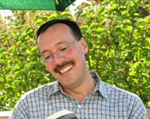
Mark your calendars and grab your umbrellas. Peter reads tomorrow!
PETER PEREIRA
Sunday, March 11, 2007 at 03:00 PM
at OPEN BOOKS, Seattle, WA
Peter Pereira draws on his life as physician, son, partner, gardener, and lover of language to create What's Written on the Body ($15 Copper Canyon Press), a richly textured collection that both moves and delights. At times the poems bubble with wordplay -- "I'm interested in the space between / detonation and denotation.. / How we know / whether to flee / or feel." At other times they unfold with a quiet grace -- "The patient was talking and I was not / hearing a sound. But I was listening and // I was there. I was standing beside and I was / listening with my hands." Though the work does not turn from life's darker moments of illness, death, cruelty, at its core this is a book of praise, pleasure, and love, generous in tone and spirit.
Friday, March 09, 2007
The Best Form
I recently read some of the best advice in the current Writer's Chronicle. In his article "The Reinventions of American Poetry Now," Ed Ochester asserts:
Critics or ordinary readers often make the mistake of deciding that the poet should have written like somebody else, rather than considering why the poet has chosen a particular style or form. That's as wrongheaded as telling Emily Dickinson to write like Walt Whitman. It's as irritating as saying to a happy person, 'why do you smile all the time?' or to a quiet person, 'why are you thinking all the time?' Give the poet a break! Just as one rule of reading in general is 'you have to allow the author her subject,' another is 'you have to allow the poet his style.' Figure out why he or she is writing that way--what the function of the style is for delivering the content of the poem.
This was the most refreshing paragraph on poetry I've read in a long time. I think about this as well, specifically in a poet's choice on how the poem looks on the page. Too often we want to change the style of a poet instead of trying to understand why they choose a certain form. In a recent workshop, a friend of mine had a certain form going that moved around the page like waves (the poem did also have the word "beach" in the title). In the last four or five lines of the poem though, the poem changes dramatically. In these final lines, the space between the words was much greater. One or two words would be spaced across the page like this. Or this.
A poet in the workshop asked about the change in form, she wasn't sure it was working for the poem. I spoke up to defend the poem's spacing and form change because the poem was about leaving the beach (the word "leave" was also mentioned in the title). For me, I saw the poem not only leaving the beach, but leaving the form as well. The subjects in the poem transformed as did the poem itself.
I think the ability to have the poem's form respect and enhance the poem's subject is a skill to learn and a pleasure to read. Occasionally, I have come across a poem and thought, "Oh great, what's with all the indenting or _____________ (fill in the blank)." Usually, if I take a few moments to sit with the poem, I can get a better idea or feel for why the poet chose a particular form. And I believe, there needs to be a reason.
Some of the best advice I learned about the form of a poem was back as an undergrad at the UW with Linda Bierds. A classmate of mine questioned the poem's form, the question was something like, "I don't understand why the form of this poem is this way?" We talked about as a class, came up with reasons we thought it was or stated, "I have no idea why the poem looks like this." I remember Linda telling the poet afterwards that they are of course welcome to choose to put the poem any way on the page, but that they needed to know why they had done it.
That statement changed the way I thought about my poems. If I found myself putting my poem in classic four line stanzas or couplets, I needed to have a reason why. Sometimes when I write about God or the church, I use three line stanzas because in my mind it pays homage to the Father, Son, and the Holy Spirit. If I write a poem about a relationship, sometimes its in couplets to reflect the couple, if the relationship breaks away, the form may as well.
At my writing workshops, I've heard others suggest that a poem needs more space when its about nature, a poem about a river should wrap around the page more, or that longer lines have created a poem to fast for its subject and it needs shorter lines to slow down. There are many different reasons for how a poem may look on the page, but ultimately, the poet needs to be aware of her reasons and not working out of a habit. If all your poems are in couplets and flush left, the poet should think about that when s/he starts the next poem.
The form of the poem is one more way to reflect the subject or tone of the poem. It can be create an actual shape or hint at something more. One of my poet friends who does this very well is Ronda Broatch. Here's a poem she wrote published in Literary Mama where form and content are working hand in hand.
Grasping at Ghosts
by Ronda Broatch
She lights a stub of candle,
studies its slow burn and dissolve
into a brass bowl.
I watch her from the edge
of the kitchen.
Eleven now, her fingertips dart
through fire, some unspoken
rite of passage I learned
from my grandmother,
entrusted now to my daughter.
She tips the candle,
drips wax onto a napkin,
squeezes it between long fingers.
Her red hair flickers in the spit of light
as she shapes the cooling flesh.
I stand in the kitchen a while longer
before telling her Enough is enough.
She sighs,
blows out the tiny flare,
grasping at the trail of passing ghosts.
The poem's form works well in many ways. Each stanza offers a moment in time and the poem weaves between present and past--the stanzas that are indented represent the past and the memory of the fire in the home and the stanzas that are flush-left represent the present where her eleven year old daughter plays with a candle. Each stanza looks like a puff of smoke or a "passing ghost," an image she uses in the last line. Even the title works adds to the form, we're "grasping" at ghosts, which makes me believe they wouldn't be lining up in a row for us, but floating around the page. The poem could have been in many forms, but I find the one she chose adds so many extra rewards to the poem. As a reader, I feel well taken care of when I read this.
Each poem should create a form that best represents the poem. And just as a fiction writer should know everything she possible can about her character, a poet should know when the poem is completed why she made the choices she did in the poem. A formed work of art, the poem is, unique in its own right and should be framed that way.
Critics or ordinary readers often make the mistake of deciding that the poet should have written like somebody else, rather than considering why the poet has chosen a particular style or form. That's as wrongheaded as telling Emily Dickinson to write like Walt Whitman. It's as irritating as saying to a happy person, 'why do you smile all the time?' or to a quiet person, 'why are you thinking all the time?' Give the poet a break! Just as one rule of reading in general is 'you have to allow the author her subject,' another is 'you have to allow the poet his style.' Figure out why he or she is writing that way--what the function of the style is for delivering the content of the poem.
This was the most refreshing paragraph on poetry I've read in a long time. I think about this as well, specifically in a poet's choice on how the poem looks on the page. Too often we want to change the style of a poet instead of trying to understand why they choose a certain form. In a recent workshop, a friend of mine had a certain form going that moved around the page like waves (the poem did also have the word "beach" in the title). In the last four or five lines of the poem though, the poem changes dramatically. In these final lines, the space between the words was much greater. One or two words would be spaced across the page like this. Or this.
A poet in the workshop asked about the change in form, she wasn't sure it was working for the poem. I spoke up to defend the poem's spacing and form change because the poem was about leaving the beach (the word "leave" was also mentioned in the title). For me, I saw the poem not only leaving the beach, but leaving the form as well. The subjects in the poem transformed as did the poem itself.
I think the ability to have the poem's form respect and enhance the poem's subject is a skill to learn and a pleasure to read. Occasionally, I have come across a poem and thought, "Oh great, what's with all the indenting or _____________ (fill in the blank)." Usually, if I take a few moments to sit with the poem, I can get a better idea or feel for why the poet chose a particular form. And I believe, there needs to be a reason.
Some of the best advice I learned about the form of a poem was back as an undergrad at the UW with Linda Bierds. A classmate of mine questioned the poem's form, the question was something like, "I don't understand why the form of this poem is this way?" We talked about as a class, came up with reasons we thought it was or stated, "I have no idea why the poem looks like this." I remember Linda telling the poet afterwards that they are of course welcome to choose to put the poem any way on the page, but that they needed to know why they had done it.
That statement changed the way I thought about my poems. If I found myself putting my poem in classic four line stanzas or couplets, I needed to have a reason why. Sometimes when I write about God or the church, I use three line stanzas because in my mind it pays homage to the Father, Son, and the Holy Spirit. If I write a poem about a relationship, sometimes its in couplets to reflect the couple, if the relationship breaks away, the form may as well.
At my writing workshops, I've heard others suggest that a poem needs more space when its about nature, a poem about a river should wrap around the page more, or that longer lines have created a poem to fast for its subject and it needs shorter lines to slow down. There are many different reasons for how a poem may look on the page, but ultimately, the poet needs to be aware of her reasons and not working out of a habit. If all your poems are in couplets and flush left, the poet should think about that when s/he starts the next poem.
The form of the poem is one more way to reflect the subject or tone of the poem. It can be create an actual shape or hint at something more. One of my poet friends who does this very well is Ronda Broatch. Here's a poem she wrote published in Literary Mama where form and content are working hand in hand.
Grasping at Ghosts
by Ronda Broatch
She lights a stub of candle,
studies its slow burn and dissolve
into a brass bowl.
I watch her from the edge
of the kitchen.
It was the crackling that woke us,
roar of heat devouring cedar.
I took her from her crib, fled
down darkened stairs, out
to cool lawn, cold moon.
Eleven now, her fingertips dart
through fire, some unspoken
rite of passage I learned
from my grandmother,
entrusted now to my daughter.
Glass shattered as sirens
whined past, unable to find us.
Now open, our house
sucked fire into its body,
a phoenix igniting.
She tips the candle,
drips wax onto a napkin,
squeezes it between long fingers.
Her red hair flickers in the spit of light
as she shapes the cooling flesh.
- From ash we built again,
exhumed bones and sooty reek,
broken teeth of window, rusted nail --
secrets of past fires rising
to the surface.
I stand in the kitchen a while longer
before telling her Enough is enough.
She sighs,
blows out the tiny flare,
grasping at the trail of passing ghosts.
The poem's form works well in many ways. Each stanza offers a moment in time and the poem weaves between present and past--the stanzas that are indented represent the past and the memory of the fire in the home and the stanzas that are flush-left represent the present where her eleven year old daughter plays with a candle. Each stanza looks like a puff of smoke or a "passing ghost," an image she uses in the last line. Even the title works adds to the form, we're "grasping" at ghosts, which makes me believe they wouldn't be lining up in a row for us, but floating around the page. The poem could have been in many forms, but I find the one she chose adds so many extra rewards to the poem. As a reader, I feel well taken care of when I read this.
Each poem should create a form that best represents the poem. And just as a fiction writer should know everything she possible can about her character, a poet should know when the poem is completed why she made the choices she did in the poem. A formed work of art, the poem is, unique in its own right and should be framed that way.
Tuesday, February 27, 2007
New Bob Hicok Interview
I found this article/interview with Bob Hicok today. I just purchased his new book, but haven't read it yet. It's still in my purse.
I've only see him once. It was at the AWP and I heard him read and yes, that was the time I got tongued asking him to sign my book, then ran out of the room after saying Thank you. I'm always amazed with poets who can talk with other poets they admire. I find when I really like a someone, I say four words--usually, "I liked your book." As a poet, sometimes, I'm not so good with words in person.
It seems he'll be reading in Fresno soon, so if you're in the area, stop by.
COINCIDENCE AND CLARITY
Bob Hicok will visit the Fresno Poets' Association for a reading.
by James Tyner
February 27, 2007
For most poets and writers, there is always that piece of work that is "it" for you. It's that one essay or poem you read that inspires you and makes you think, "yes, that's what I want to do."
For me, that was what happened when I read the poem What Would Freud Say, by Bob Hicok.
It was a few months into my first poetry class, and I had decided to pick up some poetry journals, poring through everything I could get my hands on. There was something to the voice of the speaker in that poem, the use of image and story that drew me right in. I have been a fan ever since, and Hicok's poems have always been a guideline for me.
Hicok, who was a die maker for many years while writing poetry along the way, will be reading this Thursday evening for the fifth installment of the Fresno Poets' Association season at the Fresno Art Museum. The reading begins at 7:30 p.m.
Hicok, who currently teaches at Virginia Tech, has written several books of poetry, including The Legend of Light, Animal Soul, Plus Shipping, and Insomnia Diary. The self-taught poet has won the National Education Association Fellowship and two Pushcart Prizes. His work has appeared in such places as The New Yorker, the American Poetry Review, Poetry magazine, and Ploughshares.
To start, who are the writers that inspired you?
Humpty Dumpty. Before the great fall. It changes. Right now, I like Beckian Fritz Goldberg's poetry quite a bit. Intensely lyrical, a little strange. Neruda, too, of late. George Oppen.
How did you get into writing poetry? How long have you been doing it?
I started writing when I was twenty. My girlfriend broke up with me, so I was sad and said so to a notebook, which became a sad, blue notebook. So, twenty seven years and only one sad, blue notebook.
What is the writing process like for you? Do you rewrite often?
I sit at a computer in the morning with coffee and a bagel, my hands, when done with the bagel, on either side of the keyboard and a window in front of me and mountains in front of the window. An idea shows up. If I like it, I start writing. If I don’t like it, I tell it to go away. This goes on for several hours.
Some poems I rewrite quite a few times and some poems not at all.
Is there a big difference between "academic" and other types of poetry, in your opinion?
There can be, sure. Though so many poets have moved into the university that the nature of academic poetry has itself been changed. The elbow-patch wearing, pipe smoking cliche doesn't have much use anymore, except to lampoon.
There's good and bad everywhere. I wish we weren't so sold on the idea that poets belong on campuses. That's where the money is, so bodies will flow to the money, but the campus is not an essential Petri dish.
Do you feel that your writing has changed over the years? In what way? Has it changed after becoming a teacher?
Yes. It has become stranger, less narrative. I don't think teaching has changed my work, though my poems have changed while I teach. A coincidental, not causal relationship.
Do you feel your students influence you as well as you them?
Yes. Not sure how.
What topics do you find yourself writing about most recently?
Most recently would be this morning, so disorder, order and french fires. Fires, not fries.
How does form affect your poetry?
My avoidance of fixed forms gives me great pleasure.
What advice do you have for beginning poets?
Write.
Do you feel that poetry is currently changing?
Poets are always changing their socks, so poetry is always changing its socks.
For more details on Hicok's reading, visit FresnoPoets.org.
I've only see him once. It was at the AWP and I heard him read and yes, that was the time I got tongued asking him to sign my book, then ran out of the room after saying Thank you. I'm always amazed with poets who can talk with other poets they admire. I find when I really like a someone, I say four words--usually, "I liked your book." As a poet, sometimes, I'm not so good with words in person.
It seems he'll be reading in Fresno soon, so if you're in the area, stop by.
COINCIDENCE AND CLARITY
Bob Hicok will visit the Fresno Poets' Association for a reading.
by James Tyner
February 27, 2007
For most poets and writers, there is always that piece of work that is "it" for you. It's that one essay or poem you read that inspires you and makes you think, "yes, that's what I want to do."
For me, that was what happened when I read the poem What Would Freud Say, by Bob Hicok.
It was a few months into my first poetry class, and I had decided to pick up some poetry journals, poring through everything I could get my hands on. There was something to the voice of the speaker in that poem, the use of image and story that drew me right in. I have been a fan ever since, and Hicok's poems have always been a guideline for me.
Hicok, who was a die maker for many years while writing poetry along the way, will be reading this Thursday evening for the fifth installment of the Fresno Poets' Association season at the Fresno Art Museum. The reading begins at 7:30 p.m.
Hicok, who currently teaches at Virginia Tech, has written several books of poetry, including The Legend of Light, Animal Soul, Plus Shipping, and Insomnia Diary. The self-taught poet has won the National Education Association Fellowship and two Pushcart Prizes. His work has appeared in such places as The New Yorker, the American Poetry Review, Poetry magazine, and Ploughshares.
To start, who are the writers that inspired you?
Humpty Dumpty. Before the great fall. It changes. Right now, I like Beckian Fritz Goldberg's poetry quite a bit. Intensely lyrical, a little strange. Neruda, too, of late. George Oppen.
How did you get into writing poetry? How long have you been doing it?
I started writing when I was twenty. My girlfriend broke up with me, so I was sad and said so to a notebook, which became a sad, blue notebook. So, twenty seven years and only one sad, blue notebook.
What is the writing process like for you? Do you rewrite often?
I sit at a computer in the morning with coffee and a bagel, my hands, when done with the bagel, on either side of the keyboard and a window in front of me and mountains in front of the window. An idea shows up. If I like it, I start writing. If I don’t like it, I tell it to go away. This goes on for several hours.
Some poems I rewrite quite a few times and some poems not at all.
Is there a big difference between "academic" and other types of poetry, in your opinion?
There can be, sure. Though so many poets have moved into the university that the nature of academic poetry has itself been changed. The elbow-patch wearing, pipe smoking cliche doesn't have much use anymore, except to lampoon.
There's good and bad everywhere. I wish we weren't so sold on the idea that poets belong on campuses. That's where the money is, so bodies will flow to the money, but the campus is not an essential Petri dish.
Do you feel that your writing has changed over the years? In what way? Has it changed after becoming a teacher?
Yes. It has become stranger, less narrative. I don't think teaching has changed my work, though my poems have changed while I teach. A coincidental, not causal relationship.
Do you feel your students influence you as well as you them?
Yes. Not sure how.
What topics do you find yourself writing about most recently?
Most recently would be this morning, so disorder, order and french fires. Fires, not fries.
How does form affect your poetry?
My avoidance of fixed forms gives me great pleasure.
What advice do you have for beginning poets?
Write.
Do you feel that poetry is currently changing?
Poets are always changing their socks, so poetry is always changing its socks.
For more details on Hicok's reading, visit FresnoPoets.org.