Read the full report at the link above.
And then make sure the read the ending quote from the guy from Harvard--talk about famous last words. The ironic statement in the book about the end of civilization.
FROM THE ARTICLE--
‘Major extinctions around the globe’
The report says global warming has already degraded conditions for many species, coastal areas and poor people. With a more than 90 percent level of confidence, the scientists in the draft report say man-made global warming “over the last three decades has had a discernible influence on many physical and biological systems.”
But as the world’s average temperature warms from 1990 levels, the projections get more dire. Add 1.8 degrees Fahrenheit -- 1 degree Celsius is the calculation scientists use—and between 400 million and 1.7 billion extra people can’t get enough water, some infectious diseases and allergenic pollens rise, and some amphibians go extinct. But the world’s food supply, especially in northern areas, could increase. That’s the likely outcome around 2020, according to the draft.
Add another 1.8 degrees and as many as 2 billion people could be without water and about 20 percent to 30 percent of the world’s species near extinction. Also, more people start dying because of malnutrition, disease, heat waves, floods and droughts—all caused by global warming. That would happen around 2050, depending on the level of greenhouse gases from the burning of fossil fuels.
At the extreme end of the projections, a 7- to 9-degree average temperature increase, the chart predicts: “Up to one-fifth of the world population affected by increased flood events ... “1.1 to 3.2 billion people with increased water scarcity” ...”major extinctions around the globe.”
Despite that dire outlook, several scientists involved in the process say they are optimistic that such a drastic temperature rise won’t happen because people will reduce carbon dioxide emissions that cause global warming.
“The worst stuff is not going to happen because we can’t be that stupid,” said Harvard University oceanographer James McCarthy, who was a top author of the 2001 version of this report. “Not that I think the projections aren’t that good, but because we can’t be that stupid.”
Saturday, March 31, 2007
April is the Coolest Month...
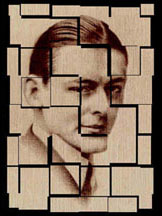
I think that's what Eliot really meant to say. Welcome Easter, the end of Lent, and National Poetry Month.
I really am going to write a poem a day. And maybe I'll post a couple here--briefly--just to make sure I keep it up. 30 poems in 30 days. Reminds me of those weight-loss programs except in this case, we're gaining words, verse, stanzas.
I've never been one to wait for inspiration to arrive. I'm impatient and life is short, if I had waited for inspiration I'd probably only have about 20 poems. Or maybe inspiration can be the deadline, the goal, the need to finish something and make it good. Inspiration as revenge, as success, as the inner struggle with something bigger than you thought.
It doesn't matter what gets us writing, it only matters that we are. We need to have something to revise. We need to sort out the thoughts that circle or heads. We need to let someone know we have fallen in love with them or are ready to leave. We need to shake things down, calm things up, explore old territory as new territory. We write because we cannot not write.
Some ideas for NaPoWriMo (National Poetry Writing Month- or write a poem a day)
* Think about the poems you love and try to write them as your own this month.
* Think about the poems you hate and write a better poem.
* Write a poem from the end to the beginning.
* Take an old poem, cut up the words and phrases, and reorder.
* Find 3 old poems that you don't like or can't finish and write down your favorite 10-15 words from those poems to use in a new poem.
* Write in a way you've never written.
* Write a sestina, a villanelle, a sonnet.
* Rhyme something.
* Steal a title of a news article and use it for your poem.
* Break a line in a place that feels terribly uncomfortable for you.
* Try to write a poem in the shape of something.
* Start a poem with the last line of someone else's poem
* Write an acrostic poem
* Hide your name in a poem
* Write a ghazal
* Break an old habit of something you do in a poem
* Write a poem Flush Right
* Write a poem with pencil if you normally use your computer or vice verse
* Write about a sad childhood event as if it happened to someone else
* Write a poem then remove all your adjectives.
* Write a poem with all those extra adjectives you just took out.
* Write a haiku
* When you are stuck, begin with "I remember" then edit that out later.
* Write an ode
* Write a poem in a letter to your favorite poet
* Write a poem using words from another language as well as English
* Write the poem you don't think you should write
* Write the poem you wouldn't want a relative to read
* Write the poem that embarrasses you
* Write a list of images and fold down your paper. Now write a list of questions. Match them up and write a poem
* Write what you think is the opposite of a New Yorker poem
* Use the word "seismic" in a poem
* Read a book of poems, then write a poem in the voice of that poet
* Start your poem, "This is the last poem of the month"
For inspiration for a poem a day, read David Lehman's THE DAILY MIRROR.
Happy writing!

Poetry Fans at the Academy of American Poets Website
 Click the above title to visit the Poetry Fans at the A of AP website along with other things for National Poetry Month.
* * *
We're almost to the first day of National Poetry Month... Pencils ready!
Friday, March 30, 2007
Poetry Party without Poets--
I had to laugh. I received my official Academy of American Poets newsletter and it reads:
On April 11, 2007, The Academy of American Poets will present a star-studded celebration of American poetry. A gala event, tickets on sale now.
But what's funny is that there are no poets involved with this event, just famous people like Lauren Bacall, Ethan Hawke and Glenn Close. Other artsy famous people to, but no poets. Is it because the Academy of American Poets think if there were real poets there, no one would come? Could they be correct?! I know there are some terrific poets who are not so terrific readers. But not one poet, not even the Poet Laureate?
Who knew the key to a fundraising poetry gala event was no poets. Apparently the poetry world is better loved (and funded) without us! See you in the audience...or not.
On April 11, 2007, The Academy of American Poets will present a star-studded celebration of American poetry. A gala event, tickets on sale now.
But what's funny is that there are no poets involved with this event, just famous people like Lauren Bacall, Ethan Hawke and Glenn Close. Other artsy famous people to, but no poets. Is it because the Academy of American Poets think if there were real poets there, no one would come? Could they be correct?! I know there are some terrific poets who are not so terrific readers. But not one poet, not even the Poet Laureate?
Who knew the key to a fundraising poetry gala event was no poets. Apparently the poetry world is better loved (and funded) without us! See you in the audience...or not.
Thursday, March 29, 2007
Small Town Life

The day went by too quickly. I walked up to feed the goats (Olie & Sammy) with my daughter and her friend. My neighbor came out and we talked about her new house remodel. We talked about another house being built next door and the house that's being built on the street below mine, our growing neighborhood. We talked about her daughter volunteering on a horse farm and learning that she'll be bringing one or two horses to live in the field with the goats. We were thrilled to hear this as they sold our favorite horse Rusty when their daughter went to college and we visited Rusty daily with apples from our tree and carrots during the off season.
Then I walked to my other neighbor's house to see their new baby lambs. 3 black 3 white and it's no lie, little lambs frolic. We talked about coyotes and how their llama is doing a great job protecting the lambs, but the other night, something--they think a dog--got in and killed one of their adult sheep. Before the guardian llama, I'd hear my neighbor's husband shoot his rifle to scare the coyotes. The coyote babies howl when they are hungry or feeding, they are easy to find in the mix of things.
When my daughter was an infant some nights I'd race into to her bedroom because I could hear her crying. When I opened the door, I'd find her fast asleep. That was when I realized that the howl of coyotes circling in the forest sounds very much like a baby's cry. I've been here ten years. It's gone by faster than I can explain. I wish I had taken better photographs of the neighborhood, but I didn't expect it change.
Though we're growing, there are still many reminders we are small town --the first obviously is that nice neighbors can shoot their guns into the forest and no one calls the police on them, we're still under 3000 people, there are trails through the forest instead of homes, I know the names of all my neighbors and people I don't live by, I once took a walk and found sheep wandering the neighborhood and this did not surprise me, I've also seen three bears, a baby cougar, bats, deer, and about thirty quail running across the street while on walks. I see bald eagles, red hawks, and heron flying by my house daily.
What I realized is that while I was in school, I've been so checked out of this life--my life. Outdoors had become a foreign city to me. I was mostly inside writing. Now, I'm watching myself return to the life I had before the MFA program, where I gardened into the evening and spent time talking to neighbors about nothing important, but everything important. I'm realizing that I'm no longer in a rush to be anywhere, because there's no place I need to be. For a long time, I've had something that's needed to be done--a book to read, a poem to be written--but now, if I don't rush back inside to get to something, it doesn't matter. I've returned to my life pre-PLU, a life of wander and leisure.
This is why I moved here. This is why I read this book-- Moving To a Small Town, a Guidebook for Moving from Urban to Rural Living. I've been so busy I've forgotten about the simple life I led. And yet, it's still around. Waiting for me to pull up a chair and sit down. I had forgotten in March how the clematis blooms and the red bodies of peonies are already stretching from earth. And the wasps begin to seek anything made of wood. It's funny how I can get wrapped up in the "importance of poetry" and forget about the world taking place without me outside my window. No wonder I haven't had anything to write about, my hands have not been in the earth and my head has been wrapped in its own thoughts. I'm just glad to be home.
How you know you’re from the Pacific Northwest
As someone born & raised in the NW, I thought this was quite funny and true—
How you know you’re from the Pacific Northwest
1. You know the state flower (Mildew)
2. You feel guilty throwing aluminum cans or paper in the trash.
3. Use the statement "sun break" and know what it means.
4. You know more than 10 ways to order coffee.
5. You know more people who own boats than air conditioners.
6. You feel overdressed wearing a suit to a nice restaurant.
7. You stand on a deserted corner in the rain waiting for the "Walk" Signal.
8. You consider that if it has no snow or has not recently erupted, is not a real mountain.
9. You can taste the difference between Starbucks, Seattle 's Best, and Veneto 's.
10. You know the difference between Chinook, Coho, and Sockeye Salmon.
11. You know how to pronounce Sequim, Puyallup , Issaquah , Oregon , Yakima ,
and Willamette
12. You consider swimming an indoor sport.
13.You can tell the difference between Japanese, Chinese and Thai food.
14. In winter, you go to work in the dark and come home in the dark-while only working eight-hour days.
15. You never go camping without waterproof matches and a poncho.
16. You are not fazed by "Today's forecast: showers followed by rain," and "Tomorrow's forecast: rain followed by showers."
17. You have no concept of humidity without precipitation.
18. You know that Boring is a town in Oregon and not just a state of mind.
19. You can point to at least two volcanoes, even if you cannot see through the cloud cover.
20. You notice, "The mountain is out" when it is a pretty day and you can actually see it.
21. You put on your shorts when the temperature gets above 50, but still wear your hiking boots and parka.
22. You switch to your sandals when it gets about 60, but keep the socks on.
23. You have actually used your mountain bike on a mountain.
24. You think people who use umbrellas are either wimps or tourists.
25. You buy new sunglasses every year, because you cannot find the old ones after such a long time.
26. You measure distance in hours.
27. You often switch from "heat" to "a/c" in the same day.
28. You design your kid's Halloween costume to fit under a raincoat.
How you know you’re from the Pacific Northwest
1. You know the state flower (Mildew)
2. You feel guilty throwing aluminum cans or paper in the trash.
3. Use the statement "sun break" and know what it means.
4. You know more than 10 ways to order coffee.
5. You know more people who own boats than air conditioners.
6. You feel overdressed wearing a suit to a nice restaurant.
7. You stand on a deserted corner in the rain waiting for the "Walk" Signal.
8. You consider that if it has no snow or has not recently erupted, is not a real mountain.
9. You can taste the difference between Starbucks, Seattle 's Best, and Veneto 's.
10. You know the difference between Chinook, Coho, and Sockeye Salmon.
11. You know how to pronounce Sequim, Puyallup , Issaquah , Oregon , Yakima ,
and Willamette
12. You consider swimming an indoor sport.
13.You can tell the difference between Japanese, Chinese and Thai food.
14. In winter, you go to work in the dark and come home in the dark-while only working eight-hour days.
15. You never go camping without waterproof matches and a poncho.
16. You are not fazed by "Today's forecast: showers followed by rain," and "Tomorrow's forecast: rain followed by showers."
17. You have no concept of humidity without precipitation.
18. You know that Boring is a town in Oregon and not just a state of mind.
19. You can point to at least two volcanoes, even if you cannot see through the cloud cover.
20. You notice, "The mountain is out" when it is a pretty day and you can actually see it.
21. You put on your shorts when the temperature gets above 50, but still wear your hiking boots and parka.
22. You switch to your sandals when it gets about 60, but keep the socks on.
23. You have actually used your mountain bike on a mountain.
24. You think people who use umbrellas are either wimps or tourists.
25. You buy new sunglasses every year, because you cannot find the old ones after such a long time.
26. You measure distance in hours.
27. You often switch from "heat" to "a/c" in the same day.
28. You design your kid's Halloween costume to fit under a raincoat.
Tuesday, March 27, 2007
Beginning to Celebrate...
 Let the celebrations begin!
Welcome to my first day without a deadline. What? Yes, today is my first day in three years when I haven't been looking forward 6 weeks and figuring out what I need to do or read or write. Yesterday I sent off my last packet of essays and poems for my MFA program. I mailed in my thesis, my bibliography, my abstract of my thesis, and the detailed "Front Matter," which is the formatted equivalent of a toothache (type your title and press enter 7 times, type your name and press enter 4 times...") But all of it, it's out of my hands. This week will be used to clean up the details and organize my writing life and then relax until August, the last residency.
I thought I'd feel more relaxed. Maybe because I still have a few "To Do's" on my list for my own writing life. Actually, it probably won't feel real until I'm wearing the cap and gown and the diploma is my writerly hands. I'm in that pre-graduation state, that "are you sure there isn't anything I forgot to do?" place. I'm decorating for Christmas in September, throwing a birthday party 3 weeks before the actual date--it won't feel real until it is real.
I've thought about what I want to do "after graduation" (insert omnious music here). Right now, I feel my future is completely open. Sort of like walking into candy shop and deciding what you want to eat, there are many choices in front of me. I think I will take these next two years and just dedicate them to writing--writing anything and everything--freelance work, essays, children's books, fiction, and of course, my monkeybaby: poetry.
The main question I'm getting from people is: Do you want to teach? My perfect situation would be teaching at a low-res program, for me, that would be ideal. But I'm not ready to jump head first into a full-time teaching job. There's an opening for a tenure-track position at a local community college and I'm intentionally not applying for it. I think it's too soon for me. I don't want to jump from the commitment of school to the commitment of a job without allowing myself some time to write--to write, to fail, and to succeed.
If I need money, there's always the poet's best friend: eBay. And now Craigslist makes money a lot easy to get as well. If I have to wear the same jeans for another two years and wool poncho, I will. There will be a time again for a full time job in my life, but it's not now, not while my daughter is still young. I figure when she's a pre-teen or teenager and annoyed with me, then I'm happy to close the front door and escape to an office, a classroom, a college. But right now, I love being home and having this time to write.
So, we'll see what happens. We'll see where I end up in the next couple years and which paths I take, which paths I avoid, and which paths take me out into the forest and leave me there. And maybe the pinata will spill open with everything I've ever wanted, or maybe it will just fall, I just need to find out for myself.
Monday, March 26, 2007
Poem of the Day - Octavio Paz

Distant Neighbor
Last night an ash tree
was about to tell
me something—it didn’t.
Octavio Paz
Sunday, March 25, 2007
Notes from a Poet Superhero--
Jeannine Hall Gailey reads in Portland, Chicago, and Seattle…And More Villainess Tour News
Received this note from Jeannine Hall Gailey-- mark your calendars!! See below--
Hey there! Wanted to drop you a quick note about readings around the country coming up in the next few weeks. Thanks again for your support and friendship.
I’ll be in Portland, Oregon, to read with Joshua Stuart and Marvin Bell this Wednesday night at 6:30 (I know, super-early, but we have to be out by 8 PM!) at the Central Library, 801 SW 10th Avenue, in the US Bank Room (1st floor.) Books will be on sale before the reading.
Next, I’m swinging a little closer to home to read with Natasha Moni, my co-editor at Crab Creek Review, on Wednesday, April 4th at 7 PM at Kirkland, Washington’s ParkPlace Books.
Then, I’m flying out to Chicago to read with Ander Monson and Catherynne M. Valente on Wednesday, April 11 at 7:30 PM at the Hopleaf for the Bookslut Reading Series in Chicago.
Finally, I’m coming back to Seattle for the Seattle Poetry Festival, where I’m performing, noon-ish, with Natasha Moni on Saturday, April 21st. The full schedule, which includes tons of interesting poets, is available here: http://www.poetryfestival.org/festival/Schedule2007.html
Please come out and say hi! I’d love to see you there.
You can also check out new reviews from Rattle and Diner of Becoming the Villainess here: http://www.wku.edu/~tom.hunley/steeltoebooks/villainessreviews.htm
And, for those of you who have asked about Villainess tour T-shirts, check this out:
http://www.cafepress.com/webbish6
That’s all the poetry news for now. Thanks and keep in touch!
Take care,
Jeannine Hall Gailey
www.webbish6.com/poetry.htm
Saturday, March 24, 2007
What I Read... & Remembering The Waste Land
I'm coming down to my final grad school days and today I put together my final bibliography for my file. A few of you have asked what I read, I'll post my entire bibliography below. Yes, I own every one one of these books including the pricy $25 Norman Dubie book, which you may see on eBay soon, I own every book except for one--Dylan Thomas. I checked that one out from the library and actually, I'm glad about that. No offense to Mr. Thomas, maybe when I read it the clouds were out of order, who knows, but I didn't quite get find it to my taste. Dubie's first book either--though I've heard he disowned it.
Some of the books were for my critical paper, "Including Laughter: The Use of Humor by Contemporary Women Poets." Some were not even books, a few articles, one interview I did. One was even by a fellow poet-blogger (Oliver de la Paz)-- great book, btw.
Some of the books explored poets I read as an undergrad, but in the space of being twenty-one, I didn't quite appreciate them. Eliot's "Waste Land" falls into this category. How I remember my professor at the UW singing, O O O O that Shakespearean Rag. We studied every footnote, going through that poem was like moving a stick through molasses, we were never done! And though there were parts I loved, I resented all the references--My gawd, I thought, just write the poem.
When I read "The Waste Land" fifteen years later, Sharon Bryan, who I was working with, had me listen to the poem before I read it. Not once or twice, but as many times as I could. She told me not to look at the notes at all. She wanted me to listen and "absorb" the poem. (If you're interested, you can actually listen to T. S. Eliot reading the whole poem online. Here's the link). I found myself reciting it in Eliot's strange faux-English accent (sort of how Madonna and Gwyneth Paltrow talk as if they both aren't really from the East Coast)--"A-prel is za crooolest munth, breeeding ly-lax out of-the-ded lahnd." And I enjoyed the poem much more this way, not stopping to read a footnote, just listening.
When I did read the full poem, I read The Waste Land: A Facsimile and Transcript of the Original Drafts Including the Annotations of Ezra Pound. Looking over my essay I wrote about it, I had forgotten about this little gem I found when I first started looking at the original draft of the poem and Ezra Pound's revisions--
Reading “The Waste Land,” I was interested in the edits and notes Ezra Pound made on the original draft. The earlier draft was much longer than the final draft of the poem. One place that had an evident change was in Eliot’s original beginning for “The Waste Land.” In the original draft Eliot began the poem with, “First we had a couple of feelers down at Tom’s place. . .” This stanza continues on for fifty-four lines; the entire section was not used. Eliot began his poem on his second page with the opening we know today: “April is the cruellest month, breeding/lilacs out of the dead land… (I bolded how many lines just so you didn't skip over it.)
Can you imagine "The Waste Land" beginning with, “First we had a couple of feelers...?" Hello, McFly. It amazed me and then reminded me just how important revision is as well as an honest friend.
Also, regarding the notes, I found Eliot's interesting response to them in The Norton Critical Edition of Eliot’s The Waste Land, where he writes:
The notes to The Waste Land! I had at first intended only to put down all the references for my quotations, with a view to spiking the guns of critics of my earlier poems who had accused me of plagiarism. Then when it came to print The Waste Land as a little book—for the poem on its first appearance in The Dial and in The Criterion had no notes whatever—it was discovered the poem was inconveniently short, so I set to work to expand the notes, in order to provide a few more pages of printed matter, with the result that they became the remarkable exposition of bogus scholarship that is still on view to-day. I have sometimes thought of getting rid of these notes; but now they can never be unstuck. They have almost a greater popularity than the poem itself…
And to think in college I just thought Eliot had a big ego... Anyway, all intriguing to us poets.
Now, for the list of what I read for school (and wrote about and cried about, and, and, and...)--
Andrews, Nin. The Book of Orgasms. Cleveland: Cleveland State University Poetry
Center, 2000.
Barreca, Regina. The Penguin Book of Women’s Humor. New York: Penguin, 1996.
---. They Used to Call Me Snow White…But I Drifted: Women’s Strategic
Use of Humor. New York: Viking, 1991.
Barresi, Dorothy. Rouge Pulp. Pittsburgh: University of Pittsburgh Press, 2002.
Bell, Marvin. Nightworks: Poems 1962-2000. Port Townsend: Copper Canyon Press, 2000.
Berryman, John. The Dream Songs. New York: Farrar, Strauss, & Giroux, 1969.
---. Homage to Mistress Bradstreet and other poems. New York: Noonday Press, 1948.
Bishop, Elizabeth. The Complete Book of Poems: 1927-1979. New York: Farrar, Straus and Giroux, 1983.
Brooks, Gwendolyn. Selected Poems. New York: Harper Perennial, 1999.
Ciuraru, Carmela. First Loves – Poets Introduce the Essential Poems That Captivated and Inspired Them. New York: Scriber, 2000.
Clifton, Lucille. Blessing the Boat. Rochester: BOA Editions, Ltd., 2000.
---. Good Woman: Poems and a Memoir 1969-1980. Rochester: BOA
Editions, Ltd., 2000.
de la Paz, Oliver. Names Above Houses. Carbondale: Southern Illinois University Press, 2001.
DeFrees, Madeline. Blue Dusk, New & Selected Poems, 1951-2001. Port Townsend: Copper Canyon Press, 2001.
Dickinson, Emily. The Complete Poems edited by Thomas H. Johnson. New York: Bayback Books/Little, Brown and Co., 1961.
Dresner, Zita and Nancy Walker. Redressing the Balance: American Women’s Literary
Humor from Colonial Time to the 1980’s. Jackson: University Press of Mississippi, 1988.
Dubie, Norman. The Alehouse Sonnets. Pittsburgh: University of Pittsburgh Press, 1971.
Dudden, Arthur Power, ed. American Humor. New York: Oxford Univ. Press, 1987.
xi-xii.
Duhamel, Denise. Email interview. 7 Oct. 2006.
---. Kinky. Alexandria: Orchises Press, 1997.
Eliot. T. S. The Waste Land: A Facsimile and Transcript of the Original Drafts Including the Annotations of Ezra Pound. Orlando: Harcourt, Inc., 1971
Gluck, Louise. The First Four Books of Poems. New Jersey: The Ecco Press, 1980.
---. The Wild Iris. New Jersey: The Ecco Press, 1992.
Goodeve, Thyrza Nicholas. 1997. "The Art of Public Address," Art in America,
November, 93-99. Frankel, David. 1998.
Gregerson, Linda. Negative Capability. Ann Arbor: The University of Michigan Press,
2001.
Hass, Robert. Field Guide. New Haven: Yale University Press, 1973.
---. Praise. New York: Ecco Press, 1979.
Hoagland, Tony. Donkey Gospel. St. Paul: Graywolf Press, 1998.
---. Sweet Ruin. Madison: University of Wisconsin Press, 1992.
---. What Narcissism Means To Me. St. Paul: Graywolf Press, 2003.
Hugo, Richard. Making Certain It Goes On – The Collected Poems of Richard Hugo. New York: W.W. Norton and Co., 1984.
---. The Real West Marginal Way. New York: W.W. Norton and Co., 1986.
---. The Triggering Town – Lectures and Essays on Poetry and Writing. New York: W.W. Norton, 1979.
Ingersoll, Earl G., ed. Breaking the Alabaster Jar: Conversations With Li-Young Lee. Rochester: BOA Editions, Ltd., 2006.
Jarrell, Mary Van Schrader. Remembering Randall. New York: Harper Collins, 1999.
Jarrell, Randall. The Complete Poems. New York: Farrar, Straus and Giroux, 1981.
---. The Lost World. New York: McMillan Publishing Co., 1965.
---. No Other Book. New York: Harper Perennial, 2000.
Kachuba, John B., ed. How to Write Funny: Add Humor to Every Kind of Writing.
Writer's. Digest Books, 2001.
Kane, Julie. “Getting Serious About Gail White’s Light Verse.” Mezzo Cammin 1.1
http://www.mezzocammin.com/iambic.php?vol=2006&iss=1&cat=criticism&page=kane
Kenyon, Jane. Otherwise. St. Paul: Graywolf Press, 1996.
Kirsch, Adam. The Wounded Surgeon: Confession & Transformation in Six American Poets: Lowell, Bishop, Berryman, Jarrell, Schwartz, Plath. New York: WW Norton & Co., 2005.
Lehman, John. America’s Greatest Unknown Poet: Lorine Niedecker. Cambridge: Wilde Publishing, 1998.
Levertov, Denise. Collected Earlier Poems, 1940-1960. New York: New Directions Book, 1979.
---. Poems 1968-1972. New York: New Directions Press, 1987.
Lowell, Robert. Selected Poems. New York: McGraw-Hill, Ryerson Ltd, 1976.
Lund, Elizabeth. “Poet Kay Ryan: A Profile.” Christian Science Monitor 25 August
2004. http://www.csmonitor.com/2004/0825/p25s01-bogn.html
McHugh, Heather. Hinge & Sign. Hanover: Wesleyan University Press, 1994.
Middlebrook, Diane. Anne Sexton: A Biography. Boston: Houghton Mifflin, 1991.
Millay, Edna St. Vincent. Collected Sonnets. New York: Harper Perennial, 1988.
Milosz, Czeslaw. New and Collected Poems 1931-2001. New York: Harper Collins, 2003.
Merwin, W.S. Present Company. Port Townsend: Copper Canyon Press, 2005.
Moore, Marianne. Complete Poems. New York: MacMillian Publishing Company, Inc. Penguin Books: 1991.
Neruda, Pablo. The Poetry of Pablo Neruda. New York: Farrar, Straus, and Giroux, 2003.
Niedecker, Lorine. Collected Works. Berkley: University of California Press, 2002.
Paz, Octavio. The Collected Poems of Octavio Paz: 1957-1987. New York: New Direction Books, 1991.
Petoskey, Barbara J. “The Laughing Poet: Tell All the Truth But Tell It Screwy,”
Absolute Write http://www.absolutewrite.com/specialty_writing/laughing_poet.htm.
Plath, Sylvia. Ariel. New York: Harper Perennial, 1961.
Robertson, Connie, ed. The Wordsworth Dictionary of Quotations, Wordsworth
Editions, Ltd. Hertfordshire, England, 1998.
Roethke, Theodore. The Collected Poems of Theodore Roethke. New York: Anchor Books, 1975.
---. On Poetry and Craft. Port Townsend: Copper Canyon Press
Schwartz, Delmore. Selected Poems: Summer Knowledge. New York: New Directions Publishing Corp., 1967.
Sexton, Anne. The Complete Poems. Boston: Houghton Mifflin, 1999.
Shakespeare, William. Shakespeare’s Sonnets Edited by Stephen Booth. New Haven: Yale University, 1977.
Simpson, Eileen. Poets in Their Youth: A Memoir. New York: Random House, 1982.
Stevens, Wallace. The Collected Poems of Wallace Stevens. New York: Vintage, 1990.
Syzmborska, Wislava. Poems New and Collected. New York: Harvest Book Harcourt Inc, 1998.
Thomas, Dylan. Collected Poems. New York: New Directions Books, 1971.
Vendler, Helen. The Art of Shakespeare’s Sonnets. Cambridge: Belknap Press of Harvard University Press, 1997.
Wallace, Ronald. God Be With The Clown: Humor in American Poetry. Columbia:
University of Missouri press, 1984.
Whitman, Walt. The Complete Poems. New York: Penguin Books, 1975.
Williams, Williams Carlos. Pictures from Brueghel and Other Poems. New York: New Direction Books, 1962.
---. Selected Poems Edited by Charles Tomlinson. New York: New Direction Books, 1985.
Some of the books were for my critical paper, "Including Laughter: The Use of Humor by Contemporary Women Poets." Some were not even books, a few articles, one interview I did. One was even by a fellow poet-blogger (Oliver de la Paz)-- great book, btw.
Some of the books explored poets I read as an undergrad, but in the space of being twenty-one, I didn't quite appreciate them. Eliot's "Waste Land" falls into this category. How I remember my professor at the UW singing, O O O O that Shakespearean Rag. We studied every footnote, going through that poem was like moving a stick through molasses, we were never done! And though there were parts I loved, I resented all the references--My gawd, I thought, just write the poem.
When I read "The Waste Land" fifteen years later, Sharon Bryan, who I was working with, had me listen to the poem before I read it. Not once or twice, but as many times as I could. She told me not to look at the notes at all. She wanted me to listen and "absorb" the poem. (If you're interested, you can actually listen to T. S. Eliot reading the whole poem online. Here's the link). I found myself reciting it in Eliot's strange faux-English accent (sort of how Madonna and Gwyneth Paltrow talk as if they both aren't really from the East Coast)--"A-prel is za crooolest munth, breeeding ly-lax out of-the-ded lahnd." And I enjoyed the poem much more this way, not stopping to read a footnote, just listening.
When I did read the full poem, I read The Waste Land: A Facsimile and Transcript of the Original Drafts Including the Annotations of Ezra Pound. Looking over my essay I wrote about it, I had forgotten about this little gem I found when I first started looking at the original draft of the poem and Ezra Pound's revisions--
Reading “The Waste Land,” I was interested in the edits and notes Ezra Pound made on the original draft. The earlier draft was much longer than the final draft of the poem. One place that had an evident change was in Eliot’s original beginning for “The Waste Land.” In the original draft Eliot began the poem with, “First we had a couple of feelers down at Tom’s place. . .” This stanza continues on for fifty-four lines; the entire section was not used. Eliot began his poem on his second page with the opening we know today: “April is the cruellest month, breeding/lilacs out of the dead land… (I bolded how many lines just so you didn't skip over it.)
Can you imagine "The Waste Land" beginning with, “First we had a couple of feelers...?" Hello, McFly. It amazed me and then reminded me just how important revision is as well as an honest friend.
Also, regarding the notes, I found Eliot's interesting response to them in The Norton Critical Edition of Eliot’s The Waste Land, where he writes:
The notes to The Waste Land! I had at first intended only to put down all the references for my quotations, with a view to spiking the guns of critics of my earlier poems who had accused me of plagiarism. Then when it came to print The Waste Land as a little book—for the poem on its first appearance in The Dial and in The Criterion had no notes whatever—it was discovered the poem was inconveniently short, so I set to work to expand the notes, in order to provide a few more pages of printed matter, with the result that they became the remarkable exposition of bogus scholarship that is still on view to-day. I have sometimes thought of getting rid of these notes; but now they can never be unstuck. They have almost a greater popularity than the poem itself…
And to think in college I just thought Eliot had a big ego... Anyway, all intriguing to us poets.
Now, for the list of what I read for school (and wrote about and cried about, and, and, and...)--
Andrews, Nin. The Book of Orgasms. Cleveland: Cleveland State University Poetry
Center, 2000.
Barreca, Regina. The Penguin Book of Women’s Humor. New York: Penguin, 1996.
---. They Used to Call Me Snow White…But I Drifted: Women’s Strategic
Use of Humor. New York: Viking, 1991.
Barresi, Dorothy. Rouge Pulp. Pittsburgh: University of Pittsburgh Press, 2002.
Bell, Marvin. Nightworks: Poems 1962-2000. Port Townsend: Copper Canyon Press, 2000.
Berryman, John. The Dream Songs. New York: Farrar, Strauss, & Giroux, 1969.
---. Homage to Mistress Bradstreet and other poems. New York: Noonday Press, 1948.
Bishop, Elizabeth. The Complete Book of Poems: 1927-1979. New York: Farrar, Straus and Giroux, 1983.
Brooks, Gwendolyn. Selected Poems. New York: Harper Perennial, 1999.
Ciuraru, Carmela. First Loves – Poets Introduce the Essential Poems That Captivated and Inspired Them. New York: Scriber, 2000.
Clifton, Lucille. Blessing the Boat. Rochester: BOA Editions, Ltd., 2000.
---. Good Woman: Poems and a Memoir 1969-1980. Rochester: BOA
Editions, Ltd., 2000.
de la Paz, Oliver. Names Above Houses. Carbondale: Southern Illinois University Press, 2001.
DeFrees, Madeline. Blue Dusk, New & Selected Poems, 1951-2001. Port Townsend: Copper Canyon Press, 2001.
Dickinson, Emily. The Complete Poems edited by Thomas H. Johnson. New York: Bayback Books/Little, Brown and Co., 1961.
Dresner, Zita and Nancy Walker. Redressing the Balance: American Women’s Literary
Humor from Colonial Time to the 1980’s. Jackson: University Press of Mississippi, 1988.
Dubie, Norman. The Alehouse Sonnets. Pittsburgh: University of Pittsburgh Press, 1971.
Dudden, Arthur Power, ed. American Humor. New York: Oxford Univ. Press, 1987.
xi-xii.
Duhamel, Denise. Email interview. 7 Oct. 2006.
---. Kinky. Alexandria: Orchises Press, 1997.
Eliot. T. S. The Waste Land: A Facsimile and Transcript of the Original Drafts Including the Annotations of Ezra Pound. Orlando: Harcourt, Inc., 1971
Gluck, Louise. The First Four Books of Poems. New Jersey: The Ecco Press, 1980.
---. The Wild Iris. New Jersey: The Ecco Press, 1992.
Goodeve, Thyrza Nicholas. 1997. "The Art of Public Address," Art in America,
November, 93-99. Frankel, David. 1998.
Gregerson, Linda. Negative Capability. Ann Arbor: The University of Michigan Press,
2001.
Hass, Robert. Field Guide. New Haven: Yale University Press, 1973.
---. Praise. New York: Ecco Press, 1979.
Hoagland, Tony. Donkey Gospel. St. Paul: Graywolf Press, 1998.
---. Sweet Ruin. Madison: University of Wisconsin Press, 1992.
---. What Narcissism Means To Me. St. Paul: Graywolf Press, 2003.
Hugo, Richard. Making Certain It Goes On – The Collected Poems of Richard Hugo. New York: W.W. Norton and Co., 1984.
---. The Real West Marginal Way. New York: W.W. Norton and Co., 1986.
---. The Triggering Town – Lectures and Essays on Poetry and Writing. New York: W.W. Norton, 1979.
Ingersoll, Earl G., ed. Breaking the Alabaster Jar: Conversations With Li-Young Lee. Rochester: BOA Editions, Ltd., 2006.
Jarrell, Mary Van Schrader. Remembering Randall. New York: Harper Collins, 1999.
Jarrell, Randall. The Complete Poems. New York: Farrar, Straus and Giroux, 1981.
---. The Lost World. New York: McMillan Publishing Co., 1965.
---. No Other Book. New York: Harper Perennial, 2000.
Kachuba, John B., ed. How to Write Funny: Add Humor to Every Kind of Writing.
Writer's. Digest Books, 2001.
Kane, Julie. “Getting Serious About Gail White’s Light Verse.” Mezzo Cammin 1.1
http://www.mezzocammin.com/iambic.php?vol=2006&iss=1&cat=criticism&page=kane
Kenyon, Jane. Otherwise. St. Paul: Graywolf Press, 1996.
Kirsch, Adam. The Wounded Surgeon: Confession & Transformation in Six American Poets: Lowell, Bishop, Berryman, Jarrell, Schwartz, Plath. New York: WW Norton & Co., 2005.
Lehman, John. America’s Greatest Unknown Poet: Lorine Niedecker. Cambridge: Wilde Publishing, 1998.
Levertov, Denise. Collected Earlier Poems, 1940-1960. New York: New Directions Book, 1979.
---. Poems 1968-1972. New York: New Directions Press, 1987.
Lowell, Robert. Selected Poems. New York: McGraw-Hill, Ryerson Ltd, 1976.
Lund, Elizabeth. “Poet Kay Ryan: A Profile.” Christian Science Monitor 25 August
2004. http://www.csmonitor.com/2004/0825/p25s01-bogn.html
McHugh, Heather. Hinge & Sign. Hanover: Wesleyan University Press, 1994.
Middlebrook, Diane. Anne Sexton: A Biography. Boston: Houghton Mifflin, 1991.
Millay, Edna St. Vincent. Collected Sonnets. New York: Harper Perennial, 1988.
Milosz, Czeslaw. New and Collected Poems 1931-2001. New York: Harper Collins, 2003.
Merwin, W.S. Present Company. Port Townsend: Copper Canyon Press, 2005.
Moore, Marianne. Complete Poems. New York: MacMillian Publishing Company, Inc. Penguin Books: 1991.
Neruda, Pablo. The Poetry of Pablo Neruda. New York: Farrar, Straus, and Giroux, 2003.
Niedecker, Lorine. Collected Works. Berkley: University of California Press, 2002.
Paz, Octavio. The Collected Poems of Octavio Paz: 1957-1987. New York: New Direction Books, 1991.
Petoskey, Barbara J. “The Laughing Poet: Tell All the Truth But Tell It Screwy,”
Absolute Write http://www.absolutewrite.com/specialty_writing/laughing_poet.htm.
Plath, Sylvia. Ariel. New York: Harper Perennial, 1961.
Robertson, Connie, ed. The Wordsworth Dictionary of Quotations, Wordsworth
Editions, Ltd. Hertfordshire, England, 1998.
Roethke, Theodore. The Collected Poems of Theodore Roethke. New York: Anchor Books, 1975.
---. On Poetry and Craft. Port Townsend: Copper Canyon Press
Schwartz, Delmore. Selected Poems: Summer Knowledge. New York: New Directions Publishing Corp., 1967.
Sexton, Anne. The Complete Poems. Boston: Houghton Mifflin, 1999.
Shakespeare, William. Shakespeare’s Sonnets Edited by Stephen Booth. New Haven: Yale University, 1977.
Simpson, Eileen. Poets in Their Youth: A Memoir. New York: Random House, 1982.
Stevens, Wallace. The Collected Poems of Wallace Stevens. New York: Vintage, 1990.
Syzmborska, Wislava. Poems New and Collected. New York: Harvest Book Harcourt Inc, 1998.
Thomas, Dylan. Collected Poems. New York: New Directions Books, 1971.
Vendler, Helen. The Art of Shakespeare’s Sonnets. Cambridge: Belknap Press of Harvard University Press, 1997.
Wallace, Ronald. God Be With The Clown: Humor in American Poetry. Columbia:
University of Missouri press, 1984.
Whitman, Walt. The Complete Poems. New York: Penguin Books, 1975.
Williams, Williams Carlos. Pictures from Brueghel and Other Poems. New York: New Direction Books, 1962.
---. Selected Poems Edited by Charles Tomlinson. New York: New Direction Books, 1985.
Friday, March 23, 2007
What I Did This Afternoon

(Not actual otter- Model otter)

The Beach, March 23th, 2007 (Actual beach, not stunt beach)
I spent the day here today for a birthday party. It's 47 degrees, but to Washingtonians in their uniform of fleece and boots, this is beach time. The kids had a blast, though there were a few (mine is included in this group) who left with wet socks and pants despite new croc boots.
And for me, the most interesting thing was for the very first time in my life, I saw an otter on the beach. I've known they were around. My sister had a place near the Ballard Locks and an otter would climb up her stairs from the water and swim in her pool. (Is that not the cutest thing?) But I've never seen one in person. This one was huge. Dog-sized. And it had this curvy dinosaur appearance about it.
I spent the day here today for a birthday party. It's 47 degrees, but to Washingtonians in their uniform of fleece and boots, this is beach time. The kids had a blast, though there were a few (mine is included in this group) who left with wet socks and pants despite new croc boots.
And for me, the most interesting thing was for the very first time in my life, I saw an otter on the beach. I've known they were around. My sister had a place near the Ballard Locks and an otter would climb up her stairs from the water and swim in her pool. (Is that not the cutest thing?) But I've never seen one in person. This one was huge. Dog-sized. And it had this curvy dinosaur appearance about it.
Also saw and heard two eagles, two golden retrievers, a blue jay, and people wrapped in blankets.
NaPoWriMo - Write a Poem a Day!

Well, we're coming up on National Poetry Month and many poets are going to take part in the Write a Poem a Day project (similar to write a novel in a month NaNoWriMo, which takes place in November). I'm going to do this. Will you join me?
If you'd like a place to post your poems each day and be with a group of other poets who are also participating, you can go to this link at Poetry Free-For-All.
Create your own thread and then post your poems daily.
Remember William Stafford's quote when you feel stuck--"Lower your standards."
Enjoy & good luck!
If you'd like a place to post your poems each day and be with a group of other poets who are also participating, you can go to this link at Poetry Free-For-All.
Create your own thread and then post your poems daily.
Remember William Stafford's quote when you feel stuck--"Lower your standards."
Enjoy & good luck!
Thursday, March 22, 2007
Angry Kitty

2 Paragraph Rant--
This was how I felt yesterday when I went to pull up one of my last critical papers for PLU and found it missing. Missing! In my new laptop. HOnestly, I don't know if I blame Sony Vaio or the new MS Vista. After an hour of all most tears, searching files (to see if it was saved under another name), I called a poet friend with a techie husband who said, "Come over, we'll find it!" Before I left, I rebooted my computer to back up my thesis and newest essay before I left and there it was again, the missing document was on my computer. I have no idea what happened.
If I didn't trust my ability with computers, I'd have blamed myself, but there was no way that I just "missed" this file, it was coming up as a "shortcut" and not a word file. Anyway, it has returned. It has been saved, backed up, emailed to others so there are copies of my thesis and final essays all over the place. Lesson learned: back up your files-- more than once a year.
breathe. breathe...
Anne's blog reminded me that NaPoWriMo is coming up! more on that...
Wednesday, March 21, 2007
Recent Google Searches to my Blog--
"kidnapped by Tess Gallagher" -- geez, I hope that's the name of a poem and this isn't a news item I missed.
"stinker the poodle" - people looking for the Dan Savage essay he read at the Paramount on This American Life, which was hilarious and ultimately "Stinker" wandered on stage. No, I don't have the full text.
"metaphoric stillbirth" -- no idea.
"what will people think of me?" of course, this was Google UK
"roar bongs" -- nice. have I even used the term "bong" on this site or "roar?"
"couplet firefighters" - again, I hope they are looking for a poem.
"poets like Linda Bierds" - Ah, two meanings here-- Poets like LB (poetry fans) or poets who are actually like LB (wannabes maybe?)
"stinker the poodle" - people looking for the Dan Savage essay he read at the Paramount on This American Life, which was hilarious and ultimately "Stinker" wandered on stage. No, I don't have the full text.
"metaphoric stillbirth" -- no idea.
"what will people think of me?" of course, this was Google UK
"roar bongs" -- nice. have I even used the term "bong" on this site or "roar?"
"couplet firefighters" - again, I hope they are looking for a poem.
"poets like Linda Bierds" - Ah, two meanings here-- Poets like LB (poetry fans) or poets who are actually like LB (wannabes maybe?)
Unique Geography

I volunteer at my daughter's school to help with their geography program. Basically, the kids learn from 5 to 25 countries each months and the older kids learn the capitals as well. The kindergartners and first graders learn a minimum of 5 each month, but can learn more if they choose.
What is fascinating to me about this process is how the kids learn to recognize and remember countries.
Some of my favorite are--
Kids remember Germany because the country looks as if it is yelling at the Czech Republic (and the dot for the capital of Berlin looks like an eye of the yelling man).
Kindergartners learned to find Iran on a map by the teacher noticing that the shape of the country looks like a slug, she said, "It shouldn't be Iran, but I slime!"
Croatia is the mouth eating Bosnia & Herzegovina.
Ethiopia plus neighboring country Djibouti, looks like the head of a chick, plus the capital of Addis Ababa makes the perfect baby chick eye.
Finland is the third finger (Norway & Sweden being the first two).
Bulgaria is the romantic kissing fish kissing the Black Sea.
The Black Sea is the foot that stepped on Turkey.
Belgium is the hat that France wears.
Of course, we all know the boot of Italy kicks Sicily.
But did you know that Pakistan is the dinosaur that fights with India's dinosaur.
Kenya is Africa's star.
Chile is the long chili pepper of South America.
Mongolia is China's brain.
Myanmar, Thailand, Laos, & Vietnam are the jellyfish above Cambodia's shell.
You know, this just may be notes for a new poem for me...
Monday, March 19, 2007
Turn Your Poem into a Bed & 3 Dozen Roses
SPRING LYRIC CONTEST on A PRAIRIE HOME COMPANION
A note from Garrison:
"Sumer is icumen in," but first spring is icumen in and the song of the lhude cuccu will be heard here on the frozen tundra and the Norwegian bachelor farmers will strip the long underwear from themselves like bark and take their first bath of the year and the crocus and tulip will poke up and why not have a poetry contest to celebrate?
So we will, on March 31, conduct our Lhude Sing Cuccu contest and present the best of your poems and lyrics on A Prairie Home Companion to compete for lovely prizes.
And the first prize — from Select Comfort — will be a Queen-sized Sleep Number 5000 bed (with foundation legs) along with three dozen roses — a bed of roses delivered to your door — a renaissance in your domestic life — a source of untold joy, not to mention untold sleep.
Shakespeare wrote about spring ("Hey nonny nonny no") and so did George Herbert ("grief melts away as snow in May") and Gerard Manley Hopkins ("What is all this juice and all this joy?") and E. E. Cummings ("wholly to be a fool while spring is in the world, my blood approves") and A.E. Housman ("Loveliest of trees the cherry now is hung with bloom along the bough"). Robert Browning wrote, "O to be in England now that April's there" and Chaucer began "Whan that Aprille with his shoures soote" and Elizabeth Barrett Browning wrote, "How do I sleep with thee? Let me number the ways. O comfort that I didst select when I selected thee!"
Keats wrote an ode to spring and now is your chance. So start now. Take up pen, or sit down at the keyboard, or brood at the window, and contemplate spring and warmth and the growing season and romance and the end of the school year — whatever bursts your bulbs — and write your poem.
Minimum: fourteen lines. Must contain reference to spring. Must be original. Must be submitted by March 28 at midnight Central Standard Time. If you've submitted work in the past to First Person or Department of Folksong, please resubmit your work to be considered for the prize.
When in disgrace with fortune and men's eyes
And buried in snow up to your eyes and noses
Why not write a spring poem and win first prize,
A Sleep Number bed that is strewn with roses?
Rules and Guidelines >>
Submission form >>
A note from Garrison:
"Sumer is icumen in," but first spring is icumen in and the song of the lhude cuccu will be heard here on the frozen tundra and the Norwegian bachelor farmers will strip the long underwear from themselves like bark and take their first bath of the year and the crocus and tulip will poke up and why not have a poetry contest to celebrate?
So we will, on March 31, conduct our Lhude Sing Cuccu contest and present the best of your poems and lyrics on A Prairie Home Companion to compete for lovely prizes.
And the first prize — from Select Comfort — will be a Queen-sized Sleep Number 5000 bed (with foundation legs) along with three dozen roses — a bed of roses delivered to your door — a renaissance in your domestic life — a source of untold joy, not to mention untold sleep.
Shakespeare wrote about spring ("Hey nonny nonny no") and so did George Herbert ("grief melts away as snow in May") and Gerard Manley Hopkins ("What is all this juice and all this joy?") and E. E. Cummings ("wholly to be a fool while spring is in the world, my blood approves") and A.E. Housman ("Loveliest of trees the cherry now is hung with bloom along the bough"). Robert Browning wrote, "O to be in England now that April's there" and Chaucer began "Whan that Aprille with his shoures soote" and Elizabeth Barrett Browning wrote, "How do I sleep with thee? Let me number the ways. O comfort that I didst select when I selected thee!"
Keats wrote an ode to spring and now is your chance. So start now. Take up pen, or sit down at the keyboard, or brood at the window, and contemplate spring and warmth and the growing season and romance and the end of the school year — whatever bursts your bulbs — and write your poem.
Minimum: fourteen lines. Must contain reference to spring. Must be original. Must be submitted by March 28 at midnight Central Standard Time. If you've submitted work in the past to First Person or Department of Folksong, please resubmit your work to be considered for the prize.
When in disgrace with fortune and men's eyes
And buried in snow up to your eyes and noses
Why not write a spring poem and win first prize,
A Sleep Number bed that is strewn with roses?
Rules and Guidelines >>
Submission form >>
Goddess of the Dustbunnies & Time Won't Give Me Time (and time makes lovers feel like they got something real...)
So I didn't clean and it didn't matter. My friend ended up having to stay home and take care of the kiddos as her husband went out of town. I completely understand this and have recently had it happen to me--not out of town, but I had realized my husband had scheduled a trade and so goes my poetry plans. In the big picture, not a big deal, but I've been thinking about the balance between poet and parent. Writer's Digest is even sponsoring an essay contest on this "When Parenting and Writing Collide."
Here are the details--
CONTEST: ARE YOU A WRITER MAMA (OR PAPA)?
Writing's hard; parenting's harder. Only the
strongest souls would consider doing them both at
the same time, and we applaud that spirit.
"Writer's Digest" wants to hear from you on the topic
of: "When Parenting and Writing Collide." Write your
best original, unpublished parenting-and-writing
story in a 500-word essay and e-mail it to
mailto:publicity(at)fwpubs.com
(replace (at) with @)
with "Writer Mama contest" in the subject line.
Christina Katz, author of
"Writer Mama," will select the top three entries. The
first-place entry will be published in an upcoming
issue of "Writer's Digest" magazine; second- and
third-place entries will be posted on
thewritermama.com. All winners will receive a signed
copy of "Writer Mama." All entries must be e-mailed
to by March 31
(replace (at) with @).
The entry must be written in the body of the e-mail;
attachments will not be accepted or opened. Each
entry should include your name, address, telephone
number and e-mail address. Only the winning writers
will be contacted, and entries will not be returned.
"Writer's Digest" retains first-time rights to run the
winning entries in the magazine and/or on our
website or associated websites, after which all rights
return to the author. The decisions of the editors are
final.
____________________________________________
My writing life collides with parenting and just about everything else daily. I'm a sort of bumpercar poet maneuvering through errands, kids, grad school, husbands (um, that should be singular--husband), and usually ramming everything head on. I think writers always collide with real life things and that's good.
Imagine if our writing only reflected what we've read and what we've learned. Life is changing daily at record speed, there are new products, new words, new species of leopards. My gawd, I *just* learned about this "internet phenomenon" called "Second City" as well as Craig's List, The Housewives of Orange County, and the Diva Cup. By the way, there's a hilarious conversation about the Diva Cup going on here, but if you don't like talking or reading about menstruation, be warned.
I am someone who can live in my little seaside world without much need for the outside world. I was the last person in America to learn who the Spice Girls were (though I think that shows highly in my favor) as well as Britney Spears, yet I think I could have lived a long and happy life without knowing of either of these two. But life is going on around us.
I think about that story where each moment is a series of boxes and between each box are little elves who add dust and cobwebs, who age the furniture and scratch the floors. Maybe this isn't a real little story but something I made up in my head when I was little to understand the passing of time. I'm fascinated by the seconds we never get back and that void we sleep through each night. Really, it amazes me that for eight hours life just stops. It's a little like dying and waking up to a new life each morning.
But I'm off track. I've entered my bumper car and I'm spinning in circles. What I had wanted to say today was that my writing time came first and I am thankful it did.
Here are the details--
CONTEST: ARE YOU A WRITER MAMA (OR PAPA)?
Writing's hard; parenting's harder. Only the
strongest souls would consider doing them both at
the same time, and we applaud that spirit.
"Writer's Digest" wants to hear from you on the topic
of: "When Parenting and Writing Collide." Write your
best original, unpublished parenting-and-writing
story in a 500-word essay and e-mail it to
mailto:publicity(at)fwpubs.com
(replace (at) with @)
with "Writer Mama contest" in the subject line.
Christina Katz, author of
"Writer Mama," will select the top three entries. The
first-place entry will be published in an upcoming
issue of "Writer's Digest" magazine; second- and
third-place entries will be posted on
thewritermama.com. All winners will receive a signed
copy of "Writer Mama." All entries must be e-mailed
to
(replace (at) with @).
The entry must be written in the body of the e-mail;
attachments will not be accepted or opened. Each
entry should include your name, address, telephone
number and e-mail address. Only the winning writers
will be contacted, and entries will not be returned.
"Writer's Digest" retains first-time rights to run the
winning entries in the magazine and/or on our
website or associated websites, after which all rights
return to the author. The decisions of the editors are
final.
____________________________________________
My writing life collides with parenting and just about everything else daily. I'm a sort of bumpercar poet maneuvering through errands, kids, grad school, husbands (um, that should be singular--husband), and usually ramming everything head on. I think writers always collide with real life things and that's good.
Imagine if our writing only reflected what we've read and what we've learned. Life is changing daily at record speed, there are new products, new words, new species of leopards. My gawd, I *just* learned about this "internet phenomenon" called "Second City" as well as Craig's List, The Housewives of Orange County, and the Diva Cup. By the way, there's a hilarious conversation about the Diva Cup going on here, but if you don't like talking or reading about menstruation, be warned.
I am someone who can live in my little seaside world without much need for the outside world. I was the last person in America to learn who the Spice Girls were (though I think that shows highly in my favor) as well as Britney Spears, yet I think I could have lived a long and happy life without knowing of either of these two. But life is going on around us.
I think about that story where each moment is a series of boxes and between each box are little elves who add dust and cobwebs, who age the furniture and scratch the floors. Maybe this isn't a real little story but something I made up in my head when I was little to understand the passing of time. I'm fascinated by the seconds we never get back and that void we sleep through each night. Really, it amazes me that for eight hours life just stops. It's a little like dying and waking up to a new life each morning.
But I'm off track. I've entered my bumper car and I'm spinning in circles. What I had wanted to say today was that my writing time came first and I am thankful it did.
Sunday, March 18, 2007
How to Win Friends and Influence People
 Yesterday at a birthday party I wanted the frosting off the cake, but it's still Lent and I decided to be good. A friend of mine who isn't religious, isn't Catholic asked "What would happen if you had sweets during Lent?" Before I could answer my mum chimed in, "Her heart would turn black." So there you have it. Spoken like a good French Catholic.
Choices
 ______________________________________________________________
Right now I have the opportunity to clean house as a friend is coming over tomorrow or to write. I'm choosing the latter. I'm choosing the one that I could actually become something--a poem, an essay, a story--not the one I do that I'll have to do a few days from now and again, keep shaking out the throw rug over the deck.
When I was outside on the surprise warm day, I realized the vines of morning glory have reached their spinning heads from the ground. It's almost time for me to have two homes that need taking care of--inside and outside. I do enough to keep the neighbors from swearing at me, but not enough to have a garden that's "enviable." This suits me. This is my dress of life, not trimmed rosebushes, but a dress of wildflowers and buttercups.
I'm realizing as the weather gets better how much time I will spend away from my home, from my writing, from my garden. I feel a bit "out of time" and while there is always so much to do, there is also nothing to do but sit in my office and work on a poem. I celebrate in small ways--expensive cheese, good coffee, taking what time I need and using it to write.
Saturday, March 17, 2007
Another Reason I Am a Nerd--
I found this exciting and was sorry I missed it--
3 'Jeopardy' Contestants End Up Tied
Mar 17, 3:16 AM EST
The Associated Press
NEW YORK -- All those years of answers and questions, and it's never happened before on "Jeopardy!" What is a three-way tie, Alex?
The three contestants on the venerable game show all finished with $16,000 after each answering the final question correctly in the category, "Women of the 1930s," on Friday's show. They identified Bonnie Parker, of the famed Bonnie and Clyde crime duo, as a woman who, as a waitress, once served one of the men who shot her.
"We've had a lot of crazy things happen on `Jeopardy!' but in 23 years I've never seen anything like this before," host Alex Trebek said.
The show contacted a mathematician who calculated the odds of such a three-way tie happening — one in 25 million.
The three contestants, Jamey Kirby of Gainesville, Fla.; Anders Martinson of Union City, Calif.; and Scott Weiss of Walkersville, Md; were all declared champions and taped a rematch that will air Monday
3 'Jeopardy' Contestants End Up Tied
Mar 17, 3:16 AM EST
The Associated Press
NEW YORK -- All those years of answers and questions, and it's never happened before on "Jeopardy!" What is a three-way tie, Alex?
The three contestants on the venerable game show all finished with $16,000 after each answering the final question correctly in the category, "Women of the 1930s," on Friday's show. They identified Bonnie Parker, of the famed Bonnie and Clyde crime duo, as a woman who, as a waitress, once served one of the men who shot her.
"We've had a lot of crazy things happen on `Jeopardy!' but in 23 years I've never seen anything like this before," host Alex Trebek said.
The show contacted a mathematician who calculated the odds of such a three-way tie happening — one in 25 million.
The three contestants, Jamey Kirby of Gainesville, Fla.; Anders Martinson of Union City, Calif.; and Scott Weiss of Walkersville, Md; were all declared champions and taped a rematch that will air Monday
Friday, March 16, 2007

Would you like me to seduce you? Is that what you're trying to tell me?

I went to the PLU grad fair to order my cap and gown-- for the MFA's we're in brown with a hood, sort of like the monks from Monty Python. I did not order a class ring nor any jewelry with the word "graduate." In the restaurant we heard "Mrs. Robinson," which of course made my husband comment about the movie.
I'm happy to be coming to the end of these 3 years in the Rainier Writers Program. I've forgotten what it's like to have homework in life, to constantly have "the next" deadline buzzing in my ear like a bothersome bee. But I know I will feel a loss after this. The program has filled my time like an overflowing goblet. It's had me reading poets and books I probably wouldn't have read-- Norman Dubie's first book, all of Shakespeare's sonnets and Helen Vendler's responses to them, Lorine Niedecker who is now one of my favorites. It also allowed me to work with poets I wouldn't have had the chance to work with.
MFA programs can get dirt thrown at them by the kids on the playground, but for me, this program helped me become a better writer. It gave my writing a sort of new validation that was getting lost as my role as a mom started to take over. It gave me focus for three years as well as discipline. Without the program, I would have never done The Making for Peace broadside series; it was my second year project. There are poems I wouldn't have written and basically all this for the cost of a $20,000 car, so one less Camry for me in life.
Do I think every poet/writers needs to get their MFA? No. Not at all. If you wanted to, you could basically create your own MFA program at home for yourself (and it would probably be a lot less financially)--find a mentor you want to work with, set deadlines, read books, go to writer's conferences, take classes, interact with other writers. Each person can become a better writer or poet with or without an MFA. A MFA guarantees nothing, each writers creates their own success, a piece of paper with three letters on it won't sit down at your computer and type out a poem.
Do MFA's help people become better writers? Yes & no. For me, it did. It definitely kicked my critical writing into gear. It helped my prose more than my poetry, but it did help some individual poems. But if you end up working with a professor who wants to change your style to his, and you let that happen, you may have to retrain yourself and find your voice once again. A friend of mine who works at an MFA program in this state said that of the 14 students who graduated with a MFA in 1992, only 2 of them were still writing creatively ten years later (note: this was a full time program and not a low-res program). She also was the one who told me about poets losing their own voice in an attempt to recreate the voice of their professor. I think most of these graduates where in their 20's though. My program has 20somethings, but also people in their 30's, 40's and 50's and I think when you've been writing for so long you're less likely to imitate others and less impressionable.
But maybe just the fact that as MFA students, we *have* to write a lot. It's required to graduate and maybe just the act of writing so many poems means we have more poems to find good poems in, or more opportunities to write a good poem. I think what makes people better writers is their own dedication to writing and to craft. Not being dedicated to getting published or making money. Not talking about writing and their past success, but writing, lots and lots of writing.
I'm not much for debate about MFA programs either you want to do it or not. No worries either way. You can have success and gold stars in your life with or without it. You don't get to wear the brown gown though, unless it's Halloween, or you've started a new life with chanting. And maybe there's an extra mid-size sedan in your life that won't be in mine. Either way, we're all in this together degrees or not, funny gowns or not, and by the way, "Camry" is an anagram for My Car.
"Mrs. Robinson, if you don't mind my saying so, this conversation is getting a little strange."
Wednesday, March 14, 2007
To the Person Who Googled "My Husband is a Firefighter Poems"
Married to a Firefighter
He says he wants me,
but when he leaves
he makes love to a redhead.
--KRA
Tuesday, March 13, 2007
And this one time, in band camp....

Okay, I have nothing important to say here, so be warned. This post will mention nothing you need or want to know, consider it a warm up, a "where's my brain" exercise.
Some bits and pieces of my day--
I had two pieces of doublemint gum left and the ghost stole it from my office, then two drawers in my kitchen were open. I should probably look in there for the gum.
This is sad, but I like to go to my bank in the morning for free coffee, cookies, and dog biscuits for Buddy Holly. But it's Lent so no cookies for me, even if there were cookies there, which there were not, but I had the coffee.
3w2ew -- my cat just stepped on the keyboard of my new laptop. Nice.
After writing about my ghost, I just found my gum (I kid you not), in a drawer, though not in the kitchen.
Tonight driving to the $1 store I thought about Bush's No Child Left Behind Plan. If I'm understanding it correctly, the schools that do the *worst* lose funding. Shouldn't be the other way around? Shouldn't schools that are having trouble be given more money so the kids can have tutors, counselors, etc? Maybe it's just me, but I think we've skimmed the icing and the cake off of our schools and are not just left with the crummy crumb-filled plate.
Things our waitress said at dinner: That stinks. You can't screw up ice cream.
***We liked her .
Soon I'll have good news to tell you, but it's not about a second book or a second child.
I received Mary Biddinger's book PRAIRIE FEVER in the mail and it's lovely! I'm looking forward to sitting down with it (on my red chaise) and diving in.
Sometimes I fantasize about condos or small cabins.
Tonight I'm proud of my golden retriever.
Monday, March 12, 2007
It's 11 p.m., do you know where your treefrog is?

This is what I hear from my bed. Even with windows closed these little guys are singing! And I don't mind their song, nor the killdeer screeching every so often (and at 5 a.m.--why?!)
For a while I thought the treefrogs were leaving our neighborhood as each year another house took the place of an empty or abandon lot. But they live on, these little frogs and their song from February until spring. My husband told me that the Pacific NW tree frog's song is the classic frog chorus they use in movies. I tend to believe this. They are just too perfect.
My Thoughts on Daylight Savings

Daylight Savings Begins
I am tired, the queen
of simple math: the clock reads seven,
so it must be six.
It is dark, morning-dark, but the killdeer
circle the neighborhood, their high-
pitched call waking the ones who are still
dreaming, still in winter pajamas, flannel
sheets. Forget the tulips,
the already-bloomed and dying crocuses,
any bulb that has to be first
for spring. Their fields are wasted on early
risers, determined and prompt.
Give me the dawdlers, sunflowers
and dahlias of fall, let me have my hour
back, my down comforter a few more
weeks. Return my frost-dipped mornings
where the only things awake are breastfed,
streetlights, a slumbering sky.
The Scoop --Peter Pereira's reading in Seattle
WHAT’S WRITTEN ON THE BODY, by PETER PEREIRA
I spent yesterday at Peter's book release reading with Jeannine and her husband. When we arrived , it was as if we’d walked into one of those wild Christmas shopping scenes where cashiers are quickly ringing up sales and gift and gift are being handed over people’s heads, but in this case there was only one thing selling—Peter’s book and they were quickly selling out (again!)
The bookstore was packed, all fifty-something chairs were taken, people stood in the back, outside on the sidewalk, behind the register, we were our own fire hazard and happy because of it. There were many rain-blessed poets in the audience: Martha Silano, Kathleen Flenniken, Susan Rich, Molly Tenenbaum, Erin Malone, and Madeline DeFrees who arrived after taking two busses and Peter kindly found her a seat in front so she didn’t have to stand.
Peter was incredible. He began by thanking his friends, family, and audience for attending. One thing that makes Peter a great reader is that he let us know what he was going to do today—read a couple poems from each of the four sections from his book. As an audience member, especially a standing audience member, it’s always a good feeling to know what “the plan” is.
His poems were wonderful and the audience was engrossed! Each poem offered so much and his words before the poems were just enough to invite us in before he read. And his poems did something for me that poems have not being doing lately—they inspired me to write. Peter’s poems were the kind that as a reader, you fall in love with.
Some other poets I’ve been reading lately have completely turned me off. I’ve felt as if the poet is yapping away, showing us his degrees and his certificates, rumbling around in the back of his closet to show off his Stradivarius then slapping me across the face and kicking me out into the street. Peter’s work is complete opposite of these poems. I don’t feel abused by his poems, but taken care of.
His book is beautiful both inside and out, and I highly recommend you have your own copy to gush over. Truly, a wonderful reading, a wonderful reception, and a new gift of poems to the world.
I spent yesterday at Peter's book release reading with Jeannine and her husband. When we arrived , it was as if we’d walked into one of those wild Christmas shopping scenes where cashiers are quickly ringing up sales and gift and gift are being handed over people’s heads, but in this case there was only one thing selling—Peter’s book and they were quickly selling out (again!)
The bookstore was packed, all fifty-something chairs were taken, people stood in the back, outside on the sidewalk, behind the register, we were our own fire hazard and happy because of it. There were many rain-blessed poets in the audience: Martha Silano, Kathleen Flenniken, Susan Rich, Molly Tenenbaum, Erin Malone, and Madeline DeFrees who arrived after taking two busses and Peter kindly found her a seat in front so she didn’t have to stand.
Peter was incredible. He began by thanking his friends, family, and audience for attending. One thing that makes Peter a great reader is that he let us know what he was going to do today—read a couple poems from each of the four sections from his book. As an audience member, especially a standing audience member, it’s always a good feeling to know what “the plan” is.
His poems were wonderful and the audience was engrossed! Each poem offered so much and his words before the poems were just enough to invite us in before he read. And his poems did something for me that poems have not being doing lately—they inspired me to write. Peter’s poems were the kind that as a reader, you fall in love with.
Some other poets I’ve been reading lately have completely turned me off. I’ve felt as if the poet is yapping away, showing us his degrees and his certificates, rumbling around in the back of his closet to show off his Stradivarius then slapping me across the face and kicking me out into the street. Peter’s work is complete opposite of these poems. I don’t feel abused by his poems, but taken care of.
His book is beautiful both inside and out, and I highly recommend you have your own copy to gush over. Truly, a wonderful reading, a wonderful reception, and a new gift of poems to the world.
Saturday, March 10, 2007
A Touchy Tribe
This goes back to the Dana Goodyear essay she published about the $$ of the Poetry Foundation.
Here's a partial response from David Orr who basically says that people in glass houses shouldn't throw rocks. He gives the New Yorker a little bit of that tough love that Goodyear gave the Poetry Foundation-- (For the full article published in the NY Times, go to link under "A Touchy Tribe." Here's a link to the original Goodyear article published in the New Yorker.)
From the NY Times 3/11/07 by David Orr (con't)
Indeed, The New Yorker now treats poetry almost exactly as Goodyear suggests the Poetry Foundation does — as a brand-enhancing commodity. Rather than actual discussions of poetry as an art, The New Yorker offers “profiles” of poets, which are distinguishable from profiles of, say, United States senators only in that the poets’ stories potentially include more references to bongs. That’s not to knock the authors of those profiles — often they’re a pleasure to read. They just have nothing to do with poetry.
And then there’s the question of the poems the magazine chooses to run. Granted, picking poems for a national publication is nearly impossible, and The New Yorker’s poetry editor, Alice Quinn, probably does it as well as anyone could. (Quinn is also liked personally, and rightly so, by many poets.) But there are two ways in which The New Yorker’s poem selection indicates the tension between reinforcing the “literariness” of the magazine’s brand and actually saying something interesting about poetry. First, The New Yorker tends to run bad poems by excellent poets. This occurs in part because the magazine has to take Big Names, but many Big Names don’t work in ways that are palatable to The New Yorker’s vast audience (in addition, many well-known poets don’t write what’s known in the poetry world as “the New Yorker poem” — basically an epiphany-centered lyric heavy on words like “water” and “light”). As a result, you get fine writers trying on a style that doesn’t suit them. The Irish poet Michael Longley writes powerful, earthy yet cerebral lines, but you wouldn’t know it from his New Yorker poem “For My Grandson”: “Did you hear the wind in the fluffy chimney?” Yes, the fluffy chimney.
The second issue with The New Yorker’s poem selection is trickier. This is what you might call “the home job”: the magazine’s widely noted fondness for the work of its own staffers and social associates. The most notorious examples were the three poems The New Yorker published by the Manhattan doyenne Brooke Astor in 1996-7 (one more than Robert Creeley managed in his whole life). Some representative lines: “I learned to take the good and bad / And smile whenever I felt sad.” Even more questionable, however, is the magazine’s preference for its own junior employees. In 2002, for instance, the poet who appeared most frequently in the magazine was the assistant to David Remnick, the editor — that assistant’s name, coincidentally, was Dana Goodyear. In fact, since 2000, Goodyear (who is 30) has appeared in the New Yorker more than Czeslaw Milosz, Jorie Graham, Derek Walcott, Wislawa Szymborska, Kay Ryan and every living American poet laureate except for W. S. Merwin. She’s already equaled Sylvia Plath’s total.
The problem with behavior like this is not that it violates some sacred duty of fairness (The New Yorker is a business, not a charity for whiny poets). The problem, to borrow a quotation from Goodyear’s article, is that this kind of thing “signals a lack of ambition and seriousness that may ultimately be fatal.” Poets may get frustrated with the Poetry Foundation; they may complain; they may disagree with certain projects. But the Poetry Foundation, however misguided or impolitic, hasn’t given up on poetry. The question is: Has The New Yorker?
Here's a partial response from David Orr who basically says that people in glass houses shouldn't throw rocks. He gives the New Yorker a little bit of that tough love that Goodyear gave the Poetry Foundation-- (For the full article published in the NY Times, go to link under "A Touchy Tribe." Here's a link to the original Goodyear article published in the New Yorker.)
From the NY Times 3/11/07 by David Orr (con't)
Indeed, The New Yorker now treats poetry almost exactly as Goodyear suggests the Poetry Foundation does — as a brand-enhancing commodity. Rather than actual discussions of poetry as an art, The New Yorker offers “profiles” of poets, which are distinguishable from profiles of, say, United States senators only in that the poets’ stories potentially include more references to bongs. That’s not to knock the authors of those profiles — often they’re a pleasure to read. They just have nothing to do with poetry.
And then there’s the question of the poems the magazine chooses to run. Granted, picking poems for a national publication is nearly impossible, and The New Yorker’s poetry editor, Alice Quinn, probably does it as well as anyone could. (Quinn is also liked personally, and rightly so, by many poets.) But there are two ways in which The New Yorker’s poem selection indicates the tension between reinforcing the “literariness” of the magazine’s brand and actually saying something interesting about poetry. First, The New Yorker tends to run bad poems by excellent poets. This occurs in part because the magazine has to take Big Names, but many Big Names don’t work in ways that are palatable to The New Yorker’s vast audience (in addition, many well-known poets don’t write what’s known in the poetry world as “the New Yorker poem” — basically an epiphany-centered lyric heavy on words like “water” and “light”). As a result, you get fine writers trying on a style that doesn’t suit them. The Irish poet Michael Longley writes powerful, earthy yet cerebral lines, but you wouldn’t know it from his New Yorker poem “For My Grandson”: “Did you hear the wind in the fluffy chimney?” Yes, the fluffy chimney.
The second issue with The New Yorker’s poem selection is trickier. This is what you might call “the home job”: the magazine’s widely noted fondness for the work of its own staffers and social associates. The most notorious examples were the three poems The New Yorker published by the Manhattan doyenne Brooke Astor in 1996-7 (one more than Robert Creeley managed in his whole life). Some representative lines: “I learned to take the good and bad / And smile whenever I felt sad.” Even more questionable, however, is the magazine’s preference for its own junior employees. In 2002, for instance, the poet who appeared most frequently in the magazine was the assistant to David Remnick, the editor — that assistant’s name, coincidentally, was Dana Goodyear. In fact, since 2000, Goodyear (who is 30) has appeared in the New Yorker more than Czeslaw Milosz, Jorie Graham, Derek Walcott, Wislawa Szymborska, Kay Ryan and every living American poet laureate except for W. S. Merwin. She’s already equaled Sylvia Plath’s total.
The problem with behavior like this is not that it violates some sacred duty of fairness (The New Yorker is a business, not a charity for whiny poets). The problem, to borrow a quotation from Goodyear’s article, is that this kind of thing “signals a lack of ambition and seriousness that may ultimately be fatal.” Poets may get frustrated with the Poetry Foundation; they may complain; they may disagree with certain projects. But the Poetry Foundation, however misguided or impolitic, hasn’t given up on poetry. The question is: Has The New Yorker?
Peter Pereira in Seattle
Mark your calendars and grab your umbrellas. Peter reads tomorrow!
PETER PEREIRA
Sunday, March 11, 2007 at 03:00 PM
at OPEN BOOKS, Seattle, WA
Peter Pereira draws on his life as physician, son, partner, gardener, and lover of language to create What's Written on the Body ($15 Copper Canyon Press), a richly textured collection that both moves and delights. At times the poems bubble with wordplay -- "I'm interested in the space between / detonation and denotation.. / How we know / whether to flee / or feel." At other times they unfold with a quiet grace -- "The patient was talking and I was not / hearing a sound. But I was listening and // I was there. I was standing beside and I was / listening with my hands." Though the work does not turn from life's darker moments of illness, death, cruelty, at its core this is a book of praise, pleasure, and love, generous in tone and spirit.
Friday, March 09, 2007
The Best Form
I recently read some of the best advice in the current Writer's Chronicle. In his article "The Reinventions of American Poetry Now," Ed Ochester asserts:
Critics or ordinary readers often make the mistake of deciding that the poet should have written like somebody else, rather than considering why the poet has chosen a particular style or form. That's as wrongheaded as telling Emily Dickinson to write like Walt Whitman. It's as irritating as saying to a happy person, 'why do you smile all the time?' or to a quiet person, 'why are you thinking all the time?' Give the poet a break! Just as one rule of reading in general is 'you have to allow the author her subject,' another is 'you have to allow the poet his style.' Figure out why he or she is writing that way--what the function of the style is for delivering the content of the poem.
This was the most refreshing paragraph on poetry I've read in a long time. I think about this as well, specifically in a poet's choice on how the poem looks on the page. Too often we want to change the style of a poet instead of trying to understand why they choose a certain form. In a recent workshop, a friend of mine had a certain form going that moved around the page like waves (the poem did also have the word "beach" in the title). In the last four or five lines of the poem though, the poem changes dramatically. In these final lines, the space between the words was much greater. One or two words would be spaced across the page like this. Or this.
A poet in the workshop asked about the change in form, she wasn't sure it was working for the poem. I spoke up to defend the poem's spacing and form change because the poem was about leaving the beach (the word "leave" was also mentioned in the title). For me, I saw the poem not only leaving the beach, but leaving the form as well. The subjects in the poem transformed as did the poem itself.
I think the ability to have the poem's form respect and enhance the poem's subject is a skill to learn and a pleasure to read. Occasionally, I have come across a poem and thought, "Oh great, what's with all the indenting or _____________ (fill in the blank)." Usually, if I take a few moments to sit with the poem, I can get a better idea or feel for why the poet chose a particular form. And I believe, there needs to be a reason.
Some of the best advice I learned about the form of a poem was back as an undergrad at the UW with Linda Bierds. A classmate of mine questioned the poem's form, the question was something like, "I don't understand why the form of this poem is this way?" We talked about as a class, came up with reasons we thought it was or stated, "I have no idea why the poem looks like this." I remember Linda telling the poet afterwards that they are of course welcome to choose to put the poem any way on the page, but that they needed to know why they had done it.
That statement changed the way I thought about my poems. If I found myself putting my poem in classic four line stanzas or couplets, I needed to have a reason why. Sometimes when I write about God or the church, I use three line stanzas because in my mind it pays homage to the Father, Son, and the Holy Spirit. If I write a poem about a relationship, sometimes its in couplets to reflect the couple, if the relationship breaks away, the form may as well.
At my writing workshops, I've heard others suggest that a poem needs more space when its about nature, a poem about a river should wrap around the page more, or that longer lines have created a poem to fast for its subject and it needs shorter lines to slow down. There are many different reasons for how a poem may look on the page, but ultimately, the poet needs to be aware of her reasons and not working out of a habit. If all your poems are in couplets and flush left, the poet should think about that when s/he starts the next poem.
The form of the poem is one more way to reflect the subject or tone of the poem. It can be create an actual shape or hint at something more. One of my poet friends who does this very well is Ronda Broatch. Here's a poem she wrote published in Literary Mama where form and content are working hand in hand.
Grasping at Ghosts
by Ronda Broatch
She lights a stub of candle,
studies its slow burn and dissolve
into a brass bowl.
I watch her from the edge
of the kitchen.
Eleven now, her fingertips dart
through fire, some unspoken
rite of passage I learned
from my grandmother,
entrusted now to my daughter.
She tips the candle,
drips wax onto a napkin,
squeezes it between long fingers.
Her red hair flickers in the spit of light
as she shapes the cooling flesh.
I stand in the kitchen a while longer
before telling her Enough is enough.
She sighs,
blows out the tiny flare,
grasping at the trail of passing ghosts.
The poem's form works well in many ways. Each stanza offers a moment in time and the poem weaves between present and past--the stanzas that are indented represent the past and the memory of the fire in the home and the stanzas that are flush-left represent the present where her eleven year old daughter plays with a candle. Each stanza looks like a puff of smoke or a "passing ghost," an image she uses in the last line. Even the title works adds to the form, we're "grasping" at ghosts, which makes me believe they wouldn't be lining up in a row for us, but floating around the page. The poem could have been in many forms, but I find the one she chose adds so many extra rewards to the poem. As a reader, I feel well taken care of when I read this.
Each poem should create a form that best represents the poem. And just as a fiction writer should know everything she possible can about her character, a poet should know when the poem is completed why she made the choices she did in the poem. A formed work of art, the poem is, unique in its own right and should be framed that way.
Critics or ordinary readers often make the mistake of deciding that the poet should have written like somebody else, rather than considering why the poet has chosen a particular style or form. That's as wrongheaded as telling Emily Dickinson to write like Walt Whitman. It's as irritating as saying to a happy person, 'why do you smile all the time?' or to a quiet person, 'why are you thinking all the time?' Give the poet a break! Just as one rule of reading in general is 'you have to allow the author her subject,' another is 'you have to allow the poet his style.' Figure out why he or she is writing that way--what the function of the style is for delivering the content of the poem.
This was the most refreshing paragraph on poetry I've read in a long time. I think about this as well, specifically in a poet's choice on how the poem looks on the page. Too often we want to change the style of a poet instead of trying to understand why they choose a certain form. In a recent workshop, a friend of mine had a certain form going that moved around the page like waves (the poem did also have the word "beach" in the title). In the last four or five lines of the poem though, the poem changes dramatically. In these final lines, the space between the words was much greater. One or two words would be spaced across the page like this. Or this.
A poet in the workshop asked about the change in form, she wasn't sure it was working for the poem. I spoke up to defend the poem's spacing and form change because the poem was about leaving the beach (the word "leave" was also mentioned in the title). For me, I saw the poem not only leaving the beach, but leaving the form as well. The subjects in the poem transformed as did the poem itself.
I think the ability to have the poem's form respect and enhance the poem's subject is a skill to learn and a pleasure to read. Occasionally, I have come across a poem and thought, "Oh great, what's with all the indenting or _____________ (fill in the blank)." Usually, if I take a few moments to sit with the poem, I can get a better idea or feel for why the poet chose a particular form. And I believe, there needs to be a reason.
Some of the best advice I learned about the form of a poem was back as an undergrad at the UW with Linda Bierds. A classmate of mine questioned the poem's form, the question was something like, "I don't understand why the form of this poem is this way?" We talked about as a class, came up with reasons we thought it was or stated, "I have no idea why the poem looks like this." I remember Linda telling the poet afterwards that they are of course welcome to choose to put the poem any way on the page, but that they needed to know why they had done it.
That statement changed the way I thought about my poems. If I found myself putting my poem in classic four line stanzas or couplets, I needed to have a reason why. Sometimes when I write about God or the church, I use three line stanzas because in my mind it pays homage to the Father, Son, and the Holy Spirit. If I write a poem about a relationship, sometimes its in couplets to reflect the couple, if the relationship breaks away, the form may as well.
At my writing workshops, I've heard others suggest that a poem needs more space when its about nature, a poem about a river should wrap around the page more, or that longer lines have created a poem to fast for its subject and it needs shorter lines to slow down. There are many different reasons for how a poem may look on the page, but ultimately, the poet needs to be aware of her reasons and not working out of a habit. If all your poems are in couplets and flush left, the poet should think about that when s/he starts the next poem.
The form of the poem is one more way to reflect the subject or tone of the poem. It can be create an actual shape or hint at something more. One of my poet friends who does this very well is Ronda Broatch. Here's a poem she wrote published in Literary Mama where form and content are working hand in hand.
Grasping at Ghosts
by Ronda Broatch
She lights a stub of candle,
studies its slow burn and dissolve
into a brass bowl.
I watch her from the edge
of the kitchen.
It was the crackling that woke us,
roar of heat devouring cedar.
I took her from her crib, fled
down darkened stairs, out
to cool lawn, cold moon.
Eleven now, her fingertips dart
through fire, some unspoken
rite of passage I learned
from my grandmother,
entrusted now to my daughter.
Glass shattered as sirens
whined past, unable to find us.
Now open, our house
sucked fire into its body,
a phoenix igniting.
She tips the candle,
drips wax onto a napkin,
squeezes it between long fingers.
Her red hair flickers in the spit of light
as she shapes the cooling flesh.
- From ash we built again,
exhumed bones and sooty reek,
broken teeth of window, rusted nail --
secrets of past fires rising
to the surface.
I stand in the kitchen a while longer
before telling her Enough is enough.
She sighs,
blows out the tiny flare,
grasping at the trail of passing ghosts.
The poem's form works well in many ways. Each stanza offers a moment in time and the poem weaves between present and past--the stanzas that are indented represent the past and the memory of the fire in the home and the stanzas that are flush-left represent the present where her eleven year old daughter plays with a candle. Each stanza looks like a puff of smoke or a "passing ghost," an image she uses in the last line. Even the title works adds to the form, we're "grasping" at ghosts, which makes me believe they wouldn't be lining up in a row for us, but floating around the page. The poem could have been in many forms, but I find the one she chose adds so many extra rewards to the poem. As a reader, I feel well taken care of when I read this.
Each poem should create a form that best represents the poem. And just as a fiction writer should know everything she possible can about her character, a poet should know when the poem is completed why she made the choices she did in the poem. A formed work of art, the poem is, unique in its own right and should be framed that way.
When I Couldn't Write a Poem...
Yesterday I literally had all day to write and I stumbled. I tried to write a poem and nothing came. I was like an addict, randomly pulling poems from the shelf trying to be inspired, trying to get my next hit. Nothing seemed remarkable to me. I quieted down, I did what another poet told me to do: sit down and write about what is on your mind. I heard crickets in my brain. Even with war, my concern with the educational system, a rainy day, health issues, there was *nothing* on my mind.
I know, how can a person think about nothing. I guess a better way to put that was that there was nothing I wanted to write about. I wasn't looking for the perfect poem, I hadn't created high standards for myself, I just wasn't interested in writing, in thinking, in exploring any subject. I sent emails. I wandered around the house and had lunch. I kept returning to the kitchen for snacks. I mixed carob chips with ginger. I picked all the almonds out of my granola. I finally got up and left my desk realizing that though I was there with everything that I physically needed to write--time, computer, solitary environment, music if I chose--I wasn't there, well, not as a poet.
A friend mentioned to me that another time I felt this way was a time when I wasn't getting out much and having experiences in life. I responded that there are only so many eagles and herons you can write about, only so much fog that cover your deck, or the ferry crossing again and again. I know Ms. Dickinson lived a rich life in her mind and words, but I find myself needing to wander into the world every so often and into new places to see the world in a fresh way.
When I arrived to my small town, I noticed everything that was different--the kingfishers, the killdeers, the broken barns, the spiderwebs between the powerlines highlighted in dew, the strange covered areas at the end of their dirt roads so someone could wait for a school bus, the old '56 Chevy truck that crashed into blackberry bushes and there it remained through each of the seasons. Sometimes it's hard to see my life with new eyes, with the "I feel like we're on vacation" feeling I had when we moved here ten years ago.
Back then, I felt we had rented a beach house and I found new words spilling from others lips--mud flats, ravine, sandpiper, cormorants, Rollercoaster Road. I'm going to step out in the world again, in my world with new eyes and be off to new places. But not today...my husband just arrived home with Chinese take-out and we're off to pretend we're 23 again and spend the day watching movies, pretend there's not a care in this wonderfulawful world.
I know, how can a person think about nothing. I guess a better way to put that was that there was nothing I wanted to write about. I wasn't looking for the perfect poem, I hadn't created high standards for myself, I just wasn't interested in writing, in thinking, in exploring any subject. I sent emails. I wandered around the house and had lunch. I kept returning to the kitchen for snacks. I mixed carob chips with ginger. I picked all the almonds out of my granola. I finally got up and left my desk realizing that though I was there with everything that I physically needed to write--time, computer, solitary environment, music if I chose--I wasn't there, well, not as a poet.
A friend mentioned to me that another time I felt this way was a time when I wasn't getting out much and having experiences in life. I responded that there are only so many eagles and herons you can write about, only so much fog that cover your deck, or the ferry crossing again and again. I know Ms. Dickinson lived a rich life in her mind and words, but I find myself needing to wander into the world every so often and into new places to see the world in a fresh way.
When I arrived to my small town, I noticed everything that was different--the kingfishers, the killdeers, the broken barns, the spiderwebs between the powerlines highlighted in dew, the strange covered areas at the end of their dirt roads so someone could wait for a school bus, the old '56 Chevy truck that crashed into blackberry bushes and there it remained through each of the seasons. Sometimes it's hard to see my life with new eyes, with the "I feel like we're on vacation" feeling I had when we moved here ten years ago.
Back then, I felt we had rented a beach house and I found new words spilling from others lips--mud flats, ravine, sandpiper, cormorants, Rollercoaster Road. I'm going to step out in the world again, in my world with new eyes and be off to new places. But not today...my husband just arrived home with Chinese take-out and we're off to pretend we're 23 again and spend the day watching movies, pretend there's not a care in this wonderfulawful world.
Thursday, March 08, 2007
NPR Nerd & What We Wore
 Last night I went to see a live taping of This American Life on stage at the Paramount in Seattle. The crowd was hugenormous and you would have thought we were at a rock concert (or should I say trendy alternative band concert).
The people didn't look like your regular Seattle NPR listener (fleece, sensible shoes, NPR logo vest from pledge week), but a hip crowd of late-twenty to forty-somethings. The group consisted of some possible pseudo-intellectuals, ex-English majors, young democrats, and artists. Women paid enough attention to their appearance so that they were pretty, but not too made up. Men wore dark coats and black-framed glasses (like their hero Ira Glass, but with a shape that is more stylish in Belltown.)
I'm always interested in the anti-fashion statement, which is also is a fashion statement itself-- the women with their literary glasses, the men with their retro hair. A friend told that at AWP there was a look for young female poets in their twenties--straight dark hair, glasses, and black boots. Even when we try to say no to society's shallow ways and their fashion statements, we are saying yes to another group, saying "I fit in here." Every group has its own set of rules for dress, you can be exiled from the stoners for being to preppy, you may not be goth"enough with your LL Bean vest, and for poets? Is there a certain look? If there is, I probably wear too much pink to be a poet. Another poet who writes about comic book hero does this too. ;-)
But enough what we wore, This American Life was about "What I Learned From Television." The show featured stories from David Rakoff, Dan Savage (from The Stranger), Chris Wilcha, and music from a great band whose CD I know own--Mates of State. The show was hilarious and it was interesting to watch a radio show being taped. We noticed when a line or word was said poorly, the speaker just said the word or line again ("I'm Ira Glass and this is....") and later, magically, it would be added in.
They talked about the new TV series that will appear on Showtime this month. They showed clips of it. I'm just new to basic cable, but have considered getting Showtime just to get my visual fix of TAL. I believe I have listened to every TAL show, I have worked way back in time through my computer, listening to a show late at night on my computer as I clean my office. I was hooked the first time I heard it--I believe David Sedaris was reading, but I'm not sure, David Sedaris is always reading, I know it was before 9/11 because I remember all the 9/11, Iraq stories that came after. What I remember is that I was just taken, just as the Swing Years and beyond takes me away, TAL is a sweet retreat from my ordinary life into the ordinary lives of others. It's probably the best storytelling around...storytelling with music. Last night, I got a better idea how it's done. I saw how Ira Glass moves his arms in odd ways while he talks, how he scratches his head, and flips a paper. The whole event went almost two hours and even from our seats which were probably the worst seats in the house--the very top back wall on the 3rd level in the corner, though technically, I was six seats over from the corner in row Z--the show was fantastic. Though I'm just trusting the guy at the desk with the arm movements was Ira Glass on stage because my view, it could have been anyone in a suit.
Afterwards, we left in a sea of hip strangers and paid for our parking in a sea of hip strangers, and got on a ferry with a bunch of people in fleece to return to our world of corduroy and wool sweaters, down vests and breathable shoes. On the ferry we talked different kinds of mixed drinks and Girl Scout cookies. We stayed in our car and the windows steamed up. N said she was getting emails from the universe--I needed clarification (the solar system or the *universe*). The *universe.* We wondered what kind of emails we'd receive if the solar system wrote emails--we decided Pluto would have the most say being kicked out of the top nine. And we argued if Neptune was Uranus' twin (Interplanet Janet said so).
We drove home and I felt better for being there.
Wednesday, March 07, 2007
An Easy Way to Make a Difference Today--
I saw this on Eduardo's blog. Please send a letter, see below
Stop Ann Coulter's Politics of Hate
Send a clear message to Lee Salem, Executive Vice President and Editor, Universal Press that providing a platform for Ann Coulter to spout anti-gay rhethoric by syndicating her column must stop now.
Coulter’s use of the demeaning and harmful word "faggot" is so beyond the pale that anyone who uses it should not be given a platform as a respected voice in the political discourse of our country.
"Faggot" is a loaded word. It is a weapon used to demean and wound our community.
The news media has a responsibility to not simply become an avenue that allows Ann Coulter the opportunity to broadcast her vile slurs.
Fill out a quick online letter HERE
Stop Ann Coulter's Politics of Hate
Send a clear message to Lee Salem, Executive Vice President and Editor, Universal Press that providing a platform for Ann Coulter to spout anti-gay rhethoric by syndicating her column must stop now.
Coulter’s use of the demeaning and harmful word "faggot" is so beyond the pale that anyone who uses it should not be given a platform as a respected voice in the political discourse of our country.
"Faggot" is a loaded word. It is a weapon used to demean and wound our community.
The news media has a responsibility to not simply become an avenue that allows Ann Coulter the opportunity to broadcast her vile slurs.
Fill out a quick online letter HERE
Snapshot of My Poetry Workshop
Last night I met with my poetry workshop. We try to meet twice a month. If we are all there, there are eight of us. Usually, we’re about 5-6. All women. 7-9 p.m. Tea unless there is a celebration, then wine and/or organic sparkling cider. Snacks—always. At A’s we have something she’s baked—crumb cake, brownies. Sometimes there's a side snack (esp. during Lent) of hummus, crackers, smoked salmon. At J’s it’s dried figs, almonds, brazil nuts, fruit, and/or with a swoosh of dark chocolate. I was the keeper of the dried figs without dark chocolate (how many more weeks do I have left of this?!) We talk for a moment, pass our poems around, then someone puts them in an order and we’re off.
What intrigued me last night was 4 of the 6 poems made reference to a violence, human violence. The other poem that didn’t had a shark attack in it though. My poem had nothing like that. It looked at the art of writing letters in Emily Dickinson’s time vs. today’s online, email, instant message world. I did think my poem was the weakest of the group last night—not that I usually compare them—but the other poems did an incredible job of creating and maintaining tension throughout the poem. My poem was much more wordplay, then and now.
I think poems that create struggle can be some of the best poems. What I appreciated about the poems last night was not only did they tell a story, they were musical too. Interesting, musical poems. I can see the poems from last night all finding homes in journals. Though we don’t talk about submitting too much. Sometimes after a poem, someone will say, “So, where would you send this one?” and we may jump in with a few ideas, but mostly, the workshop is about the writing and craft. I would even say it’s about the art and balance of writing, of discussing how something came about, how we make time for poetry in our lives, what we’re reading or what in the poem-world (not poetry world, or po’ biz world) is of interest to us. We discuss a poem or poet, and what s/he is doing in his/her work that we’d like to be doing or are trying to do.
Mostly, it’s about the poems. We read them, we listen, we respond, we ask questions. Afterwards, we linger for a few minutes then return out into the darkness and find our own paths back home.
What intrigued me last night was 4 of the 6 poems made reference to a violence, human violence. The other poem that didn’t had a shark attack in it though. My poem had nothing like that. It looked at the art of writing letters in Emily Dickinson’s time vs. today’s online, email, instant message world. I did think my poem was the weakest of the group last night—not that I usually compare them—but the other poems did an incredible job of creating and maintaining tension throughout the poem. My poem was much more wordplay, then and now.
I think poems that create struggle can be some of the best poems. What I appreciated about the poems last night was not only did they tell a story, they were musical too. Interesting, musical poems. I can see the poems from last night all finding homes in journals. Though we don’t talk about submitting too much. Sometimes after a poem, someone will say, “So, where would you send this one?” and we may jump in with a few ideas, but mostly, the workshop is about the writing and craft. I would even say it’s about the art and balance of writing, of discussing how something came about, how we make time for poetry in our lives, what we’re reading or what in the poem-world (not poetry world, or po’ biz world) is of interest to us. We discuss a poem or poet, and what s/he is doing in his/her work that we’d like to be doing or are trying to do.
Mostly, it’s about the poems. We read them, we listen, we respond, we ask questions. Afterwards, we linger for a few minutes then return out into the darkness and find our own paths back home.
Tuesday, March 06, 2007
Happy Daze. . .
 Update--
I'm feeling better and trying to find a poem to bring to my workshop tonight. My poet friends always make me feel better about things. We have about a 20 minute drive to the island (there's a bridge, we're not in a magical boatcar) and these talks can sometimes become my inexpensive version of therapy.
Though I said I might delete that last post, I won't because I'm working on being more vulnerable. I know, that's not much, but it's what it is. I like thick walls and thicker skin. I always liked Leather Tuscadero better than Pinky, just as I preferred Kristy McNichol over Tatum O'Neill in Little Darlings.
The Eyes Have It-
For those of you keeping track of my December eye issues, I had an eye appt. today and my eyes are almost completely back to normal. I'm back with 20/20 vision and my right eye shows barely any signs that there was an issue, the left eye shows a bit, but things are looking (no pun intended) good. I'll be back in for another MRI this month-- bring on the tube of relaxation.
The Good Book--
I mentioned recently I've read a great book and I'll post more on it soon, but I'll give you the title: Mary Pipher's Writing to Change the World. Quite remarkable. Here's a quote from it:
If we are not discovering new territory as we write, we will not be able to offer our readers fresh vistas.
There will be more of this book to share... coming soon to a blog near you...
#
Tin House Summer Workshop: July 8th-July 15th
I thought this sounded pretty interesting--
Tin House Summer Workshop: July 8th-July 15th
Reed College, Portland, Oregon
POETRY FACULTY--
Thomas Sayers Ellis is the author of The Maverick Room (Graywolf 2005) and a chaplet, Song On (WinteRed Press 2005) and his work has recently appeared in Poetry, Tin House and Waxpoetics. A recipient of The Whiting Writers' Award, he lives in Brooklyn, New York and teaches at Sarah Lawrence College and in the Lesley University low-residency Creative Writing Program.
Marie Howe’s third collection of poems will be published by W. W. Norton in 2007. Howe’s first collection, The Good Thief, was selected by Margaret Atwood for the National Poetry Series, and Howe has received a Guggenheim and a National Endowment for the Arts fellowship. Her poems have appeared in The New Yorker, The Atlantic, Agni, Harvard Review, and New England Review, among others. Stanley Kunitz has praised her “luminous, intense, eloquent” verse, and previous reviewers have noted that, “Unlike the earlier confessional poetry of Plath, Lowell, Sexton et al., Howe’s writing is not so much a moan or a shriek as a song. It is a genuinely feminine form…a poetry of intimacy, witness, honesty, and relation” (Boston Globe). She teaches at Sarah Lawrence College in Bronxville, NY.
D. A. Powell is the author of Tea (Wesleyan, 1998), Lunch (Wesleyan, 2000) and Cocktails (Graywolf, 2004), the latter a finalist for the National Book Critics' Circle and the PEN West Literary Awards. Powell is the recipient of the Pushcart Prize, fellowships from the NEA and the James Michener Foundation, and awards from the Boston Review, Prairie Schooner, the Academy of American Poets and the Poetry Society of America. He has taught at Harvard, Columbia, the Iowa Writers' Workshop and the Fine Arts Work Center in Provincetown. He is currently on faculty at the University of San Francisco
Tin House Summer Workshop: July 8th-July 15th
Reed College, Portland, Oregon
POETRY FACULTY--
Thomas Sayers Ellis is the author of The Maverick Room (Graywolf 2005) and a chaplet, Song On (WinteRed Press 2005) and his work has recently appeared in Poetry, Tin House and Waxpoetics. A recipient of The Whiting Writers' Award, he lives in Brooklyn, New York and teaches at Sarah Lawrence College and in the Lesley University low-residency Creative Writing Program.
Marie Howe’s third collection of poems will be published by W. W. Norton in 2007. Howe’s first collection, The Good Thief, was selected by Margaret Atwood for the National Poetry Series, and Howe has received a Guggenheim and a National Endowment for the Arts fellowship. Her poems have appeared in The New Yorker, The Atlantic, Agni, Harvard Review, and New England Review, among others. Stanley Kunitz has praised her “luminous, intense, eloquent” verse, and previous reviewers have noted that, “Unlike the earlier confessional poetry of Plath, Lowell, Sexton et al., Howe’s writing is not so much a moan or a shriek as a song. It is a genuinely feminine form…a poetry of intimacy, witness, honesty, and relation” (Boston Globe). She teaches at Sarah Lawrence College in Bronxville, NY.
D. A. Powell is the author of Tea (Wesleyan, 1998), Lunch (Wesleyan, 2000) and Cocktails (Graywolf, 2004), the latter a finalist for the National Book Critics' Circle and the PEN West Literary Awards. Powell is the recipient of the Pushcart Prize, fellowships from the NEA and the James Michener Foundation, and awards from the Boston Review, Prairie Schooner, the Academy of American Poets and the Poetry Society of America. He has taught at Harvard, Columbia, the Iowa Writers' Workshop and the Fine Arts Work Center in Provincetown. He is currently on faculty at the University of San Francisco
Monday, March 05, 2007
To Quote Billy Squire: Emotions in Motion
I'm not too good with emotions, which is why I write. Where some people can say, "I feel this way because of this," what I say is "The sun doesn't feel right on my skin." I tend not to understand the details of my feelings.
Emotions are these strange family members that walk in unannounced. They expect attention--a lot of attention--and they have me running around in circles and I don't know why. Tonight I'm feeling as if three or four strange family members have moved into my house. They aren't letting me write, they're bringing up the same concerns over and over. And it doesn't matter if it's something small, but they keep spinning the top across the kitchen floor and each time, I watch it again and again.
If it sounds as if I'm speaking in code, in a way I am. As I said, I never learned to speak about how I felt. In our family, the recommended feeling was happy--we either felt good, or we didn't feel at all. So when I do feel down, I'm never sure how to approach it or why it's happening. It's sort of like being stuck in a ditch and the more I spin my wheels, the deeper I get. My mind works *against* me in such situations. It keeps replaying pain like some album stuck in a groove.
And even as I write this, I know I'll regret it in the morning and I will delete it because it's so uncomfortable to discuss these feelings, but it's more uncomfortable not to, which again is why I write. I write because I have no better outlet for dealing with myself and my concerns. It sounds so self-fulfilling, such ego, such me and my problems (sung to me and my shadow), but writing it down somehow allows me to move forward, to push the car out of the ditch and get some traction.
And tomorrow I hope to awake with a good feeling of all is well, of "I must have just been overtired," of the world is a good place and people are mostly good. While the sirens sound, "We'll be okay, we'll be okay..."
Emotions are these strange family members that walk in unannounced. They expect attention--a lot of attention--and they have me running around in circles and I don't know why. Tonight I'm feeling as if three or four strange family members have moved into my house. They aren't letting me write, they're bringing up the same concerns over and over. And it doesn't matter if it's something small, but they keep spinning the top across the kitchen floor and each time, I watch it again and again.
If it sounds as if I'm speaking in code, in a way I am. As I said, I never learned to speak about how I felt. In our family, the recommended feeling was happy--we either felt good, or we didn't feel at all. So when I do feel down, I'm never sure how to approach it or why it's happening. It's sort of like being stuck in a ditch and the more I spin my wheels, the deeper I get. My mind works *against* me in such situations. It keeps replaying pain like some album stuck in a groove.
And even as I write this, I know I'll regret it in the morning and I will delete it because it's so uncomfortable to discuss these feelings, but it's more uncomfortable not to, which again is why I write. I write because I have no better outlet for dealing with myself and my concerns. It sounds so self-fulfilling, such ego, such me and my problems (sung to me and my shadow), but writing it down somehow allows me to move forward, to push the car out of the ditch and get some traction.
And tomorrow I hope to awake with a good feeling of all is well, of "I must have just been overtired," of the world is a good place and people are mostly good. While the sirens sound, "We'll be okay, we'll be okay..."
Day of Writing
Today I have the time to write and with that time comes the responsibility not to waste it. I learned a great word today: multislacking-- basically doing a lot of nothing at once. I have spent many a day multislacking, but today, I've already began writing, though I haven't hit that place of "flow," which is why I thought I'd check in here.
I don't know if other bloggers feel the blog is a nice way to "warm up" to writing. In sports, it's stretching before running five miles. In baking, it's putting all your ingredients on the counter. For me, it's that moment to see what I'm thinking about in words and letters. To release my inner-censor and just type (notice I didn't say "write," that comes once my fingers and brain are warm).
To me, a day of writing feels luxurious like drinking a good bottle of wine with some delicious French cheese. It feels like the expensive afghan my friend gave me and just to cuddle up in that on the couch Sunday morning feels as if I'm on vacation in a fine resort. Life's little luxuries, enjoy them when you can.
I don't know if other bloggers feel the blog is a nice way to "warm up" to writing. In sports, it's stretching before running five miles. In baking, it's putting all your ingredients on the counter. For me, it's that moment to see what I'm thinking about in words and letters. To release my inner-censor and just type (notice I didn't say "write," that comes once my fingers and brain are warm).
To me, a day of writing feels luxurious like drinking a good bottle of wine with some delicious French cheese. It feels like the expensive afghan my friend gave me and just to cuddle up in that on the couch Sunday morning feels as if I'm on vacation in a fine resort. Life's little luxuries, enjoy them when you can.
Sunday, March 04, 2007
Money Changes Everything -Extravagant Purchases
I just finished an incredible book, which I will write about soon, but I want to write about a new anthology on money I began reading--Money Changes Everything--which is a book of essays by writers about well, money and their relationship with it.
The first essay I read was by the now well-off author of the Lemony Snicket books, Daniel Handler. He decided to take the $1200 he was going to be paid for his essay and use it to buy a $1200 bottle of wine. The question being--is buying a $1200 bottle of wine immoral...and also, what does a $1200 bottle of wine taste like (seems it tastes pretty much like regular wine).
Daniel has a personable dry-humor voice that works well for this piece. He's honest in telling us that he was broke once and now, he's far from broke--think the Jim Carrey movie--yep, not even close. As his agent said to him, "The money train is pulling into your station" and it did.
And though it's completely a way to get new material, I enjoyed his experiment of buying this $1200 bottle of wine and inviting his poorest friends over to drink it with him. And when his poor friends didn't think it was immoral of him purchasing a $1200 bottle of wine, he said, "So you would purchase a $1200 bottle of wine," and they said "Never! But we're fine with you using your money to buy it."
What it made me think of are these odd purchases in our lives, the extravagant moments when we throw money at something we think we want, or do want and if we feel regret afterward or if we are still to this day thrilled with our purchase.
When I 29, I was at an antique shop and saw an old stained glass heavy wooden door from England. I asked my husband "Do you think that would fit in between the laundry room and the kitchen?" He said yes, not knowing what it cost. Great! I said, can that be my anniversary gift? Sure, he said. I paid $400 for that door I never measured, never flinched at the price or tried to bargain down. Five minutes later I was the owner of a hundred year old door that may or may not fit in my house.
Since then, that door (which did fit) has given me much writing material, photo opportunities in front of it, and just plain happiness as I look at it with the vinyl "6" I placed on top to represent our anniversary. If/when I leave this house, that door is coming with me, it could go on to a new life as a tabletop or interesting wall decoration. But maybe what it brought me was the realization that my spontaneous, my decisions from the heart have always been my best decisions. Every day it is a reminder that when I see something I want, I should act and trust more in my gut than my head.
* * *
What is the craziest thing you have every purchased? Do you regret it or not?
What's your most spontaneous purchase? Tell me, I'm interested.
The first essay I read was by the now well-off author of the Lemony Snicket books, Daniel Handler. He decided to take the $1200 he was going to be paid for his essay and use it to buy a $1200 bottle of wine. The question being--is buying a $1200 bottle of wine immoral...and also, what does a $1200 bottle of wine taste like (seems it tastes pretty much like regular wine).
Daniel has a personable dry-humor voice that works well for this piece. He's honest in telling us that he was broke once and now, he's far from broke--think the Jim Carrey movie--yep, not even close. As his agent said to him, "The money train is pulling into your station" and it did.
And though it's completely a way to get new material, I enjoyed his experiment of buying this $1200 bottle of wine and inviting his poorest friends over to drink it with him. And when his poor friends didn't think it was immoral of him purchasing a $1200 bottle of wine, he said, "So you would purchase a $1200 bottle of wine," and they said "Never! But we're fine with you using your money to buy it."
What it made me think of are these odd purchases in our lives, the extravagant moments when we throw money at something we think we want, or do want and if we feel regret afterward or if we are still to this day thrilled with our purchase.
When I 29, I was at an antique shop and saw an old stained glass heavy wooden door from England. I asked my husband "Do you think that would fit in between the laundry room and the kitchen?" He said yes, not knowing what it cost. Great! I said, can that be my anniversary gift? Sure, he said. I paid $400 for that door I never measured, never flinched at the price or tried to bargain down. Five minutes later I was the owner of a hundred year old door that may or may not fit in my house.
Since then, that door (which did fit) has given me much writing material, photo opportunities in front of it, and just plain happiness as I look at it with the vinyl "6" I placed on top to represent our anniversary. If/when I leave this house, that door is coming with me, it could go on to a new life as a tabletop or interesting wall decoration. But maybe what it brought me was the realization that my spontaneous, my decisions from the heart have always been my best decisions. Every day it is a reminder that when I see something I want, I should act and trust more in my gut than my head.
* * *
What is the craziest thing you have every purchased? Do you regret it or not?
What's your most spontaneous purchase? Tell me, I'm interested.
Saturday, March 03, 2007
Weekly Poetry Exercise: Ekphrastic poetry

KAHLO, FRIDA. 1927 portrait de miguel N Lira
* * *

Title: The Love Embrace Of The Universe, The Earth, Me, Diego And Mr Xolotl 1949
_____________
Ekphrastic poetry: Poems that are based on another form of art, such as paintings, sculptures or musical compositions.
Look over these paintings by Frida Kahlo. Think about the colors and images, what emotions they bring out in you. What in these paintings (if anything) haunts you in your life? Do they make you remember a dream you've had? Fear? Love? Desire? Pain?
What image do you focus on first? What image did you not notice?
Once you've spent some time with the paintings--
First: Write as a person or object within the painting.
Second: Write as the painter.
Third: Write as you, the poet, perceiving the art.
Your poem can either be created from one of these sections or may combine all three.
Happy writing.
Fantastic Frida!

 I spent the day at the Tacoma Art Museum at the "Frida Kahlo: Images of an Icon" exhibition.
 The museum was filled with images not by Frida, but of Frida.
The incredible photo of Friday with roses in her hair in front of the green background was there and was probably my favorite. Though I loved the photos of her with her animals--Frida with goat, fawn, monkey, dog, doves...
On my desk lamp I have a magnet a friend gave me with an image of Friday that says "Passion" below it. What she does in her paintings, I want to do in my poetry.